General Update
7 Digital Marketing Trends to Watch for in 2026 [1]
Digital marketing never sits still and 2026 looks set to bring a few major shifts in where people spend attention, how platforms evolve, and what audiences will (and won’t) tolerate.
This recap highlights seven trends expected to shape 2026, according to Social Media Today.
1) Short-form video stays the main event
Short-form video continues to dominate social feeds powered by TikTok, Instagram Reels, YouTube Shorts, Snapchat Spotlight, and more. Social platforms are increasingly behaving like entertainment portals, with endless clips ready whenever users have a spare moment.
A few signals the article highlights:
- Reels now make up 50% of time spent on Instagram [2]
- YouTube Shorts are viewed 200+ billion times per day [3]
- Snapchat Spotlight views in the U.S. grew 300%+ year-over-year [4]
- TikTok leads major apps in average time spent[5]
- Reels has become the primary engagement surface on Facebook[6]
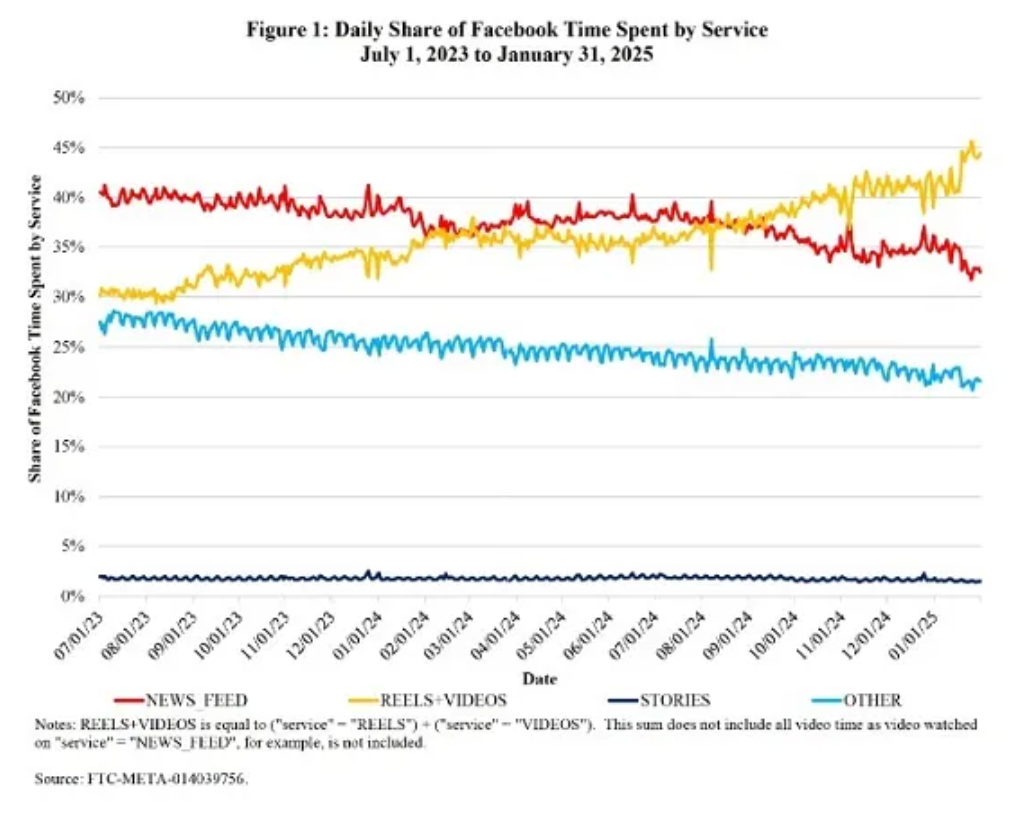
What to do: If you want reach and engagement in 2026, your plan likely needs short-form video content or at minimum, ad placements inside short-form feeds.
2) AR becomes a bigger deal (for real this time)
AR has been “almost here” for years, but the article suggests 2026 is when functional AR glasses may finally reach consumers in a meaningful way.
Snapchat (positioned in the piece as the leader in AR engagement) is expected to make a big move with its AR Specs (an AR version of Spectacles)[7], which Snap says will launch this year (no exact date given)[8]. Meta is also developing AR glasses, and could push harder to compete.

The marketing implications could be huge: think wearable experiences and promotions triggered by location, products, and what people are viewing. The article also points to Snapchat’s long history of exploring AR ad concepts like a 2015 patent describing image-recognition “info cards” and overlays tied to what’s in a photo[9].
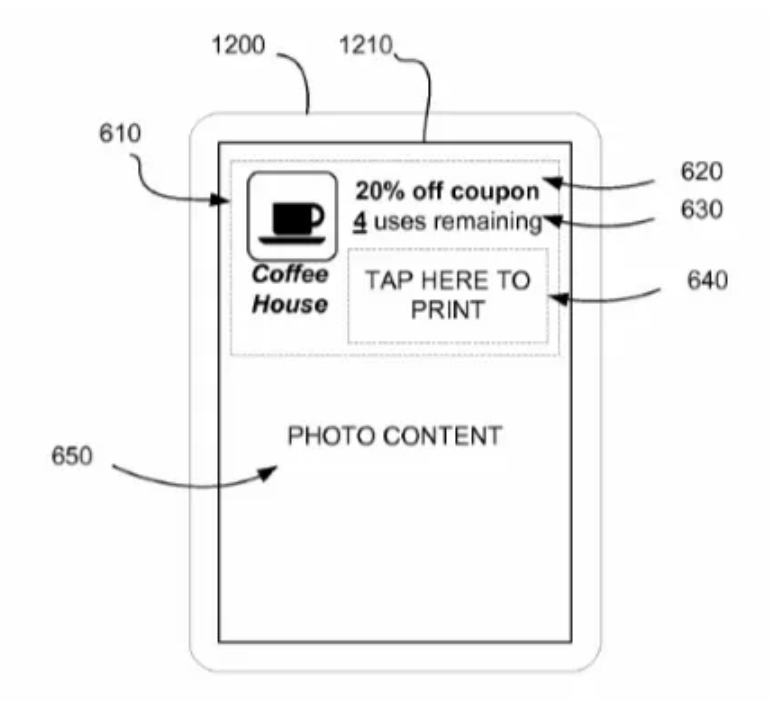
What to do: Start tracking AR placements and use-cases now—especially if your product or services connect to places, real-world objects, or in-the-moment decisions.
3) Reddit users may get tired of brands
Reddit’s visibility is rising partly because AI chatbot answers frequently cite Reddit [10] and marketers want in on that discovery surface.
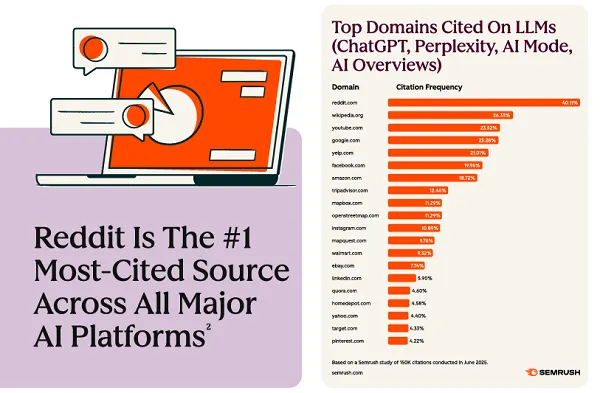
The article suggests more brands will push into Reddit via ads and “organic” participation, creating SEO-like competition inside threads. The risk: brand-heavy manipulation could reduce the value of Reddit discussions, forcing Reddit to rely more on community controls (including upvotes/downvotes) to protect discussion quality.
What to do: If you show up on Reddit, focus on genuine contribution. Overly salesy tactics may trigger backlash and weaken trust.
4) “AI slop” may change how people share content
Generative AI tools are getting so good they can fool even skeptical viewers but the article predicts a growing backlash in 2026, potentially pushing platforms toward AI opt-outs and stronger controls [11].
A key point: when people get embarrassed for sharing AI fakes, they may become more cautious sharing less, posting fewer links, and engaging less overall. That matters because platforms depend on engagement data and time-spent to drive ad revenue. The article notes some platforms have already introduced ways to limit AI results[12], and expects more steps like this.
What to do: Treat authenticity as a strategy. Be careful with AI-generated visuals, and be ready to clearly label or verify content when trust is critical.
5) Threads is expected to overtake X
The article argues that trend lines suggest Threads will surpass X in 2026 citing Threads at 400 million monthly active users[13] in two years versus X’s reported 600 million[14] over its entire history.
It also notes Threads is strengthening as a real-time information network, especially around sports (with the NBA mentioned among major brands leaning in), while X continues to face controversy that some organizations may want to avoid[15].
What to do: If you haven’t already, claim your Threads handle and start learning what works there. The article expects more analytics and brand tools from Threads over time.
6) Facebook may offer an algorithm opt-out
Algorithms drive engagement, but the article frames them as a contributor to polarization—and predicts this becomes a bigger regulatory focus in 2026.
The piece suggests regulators (with the EU specifically referenced) may push for more algorithm opt-outs, and that Meta could be forced to at least test an algorithm-free Facebook experience in some regions.
What to do: Diversify how you reach audiences. If feed ranking changes (or people opt out), brands may need stronger community, direct traffic, and repeatable content formats that don’t rely on algorithmic boosts.
7) New teen apps may pop up
The article notes how hard it is for new social apps to break through, because if something gains traction, big platforms can copy it and scale fast.
But with more places exploring or implementing teen social restrictions, the article suggests new teen-focused apps may emerge as alternatives. It also flags a potential downside: pushing teens off large platforms could lead them to smaller spaces with fewer protections. The author references Australia’s recent teen social media restrictions and says the teens impacted (including the author’s) haven’t changed behavior much suggesting they’ll simply find other options.
What to do: Keep an eye on “small” apps gaining teen traction—today’s niche platform can become tomorrow’s mainstream channel.