- Instagram Update
- Instagram Rolls Out Algorithm Control Option to All English-Speaking Users [1]
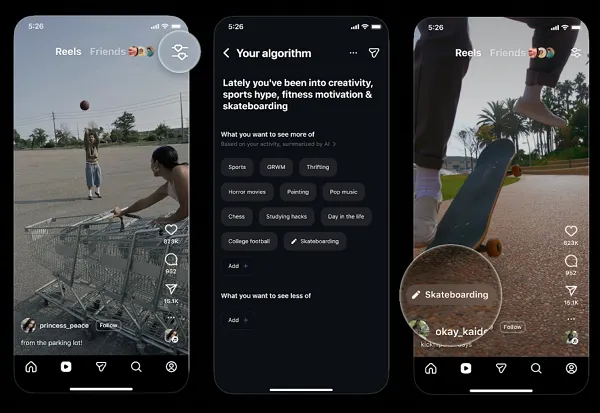
Instagram has expanded access to its “Your Algorithm” controls, confirming that all English-speaking users globally can now use the feature after earlier testing began in October 2025[2]. The update is focused on Reels, and is designed to give users a clearer way to influence what Instagram recommends by letting them review the interest topics Instagram associates with their activity and adjust those topics when their preferences change. [3]
What Changed
- Wider availability: The manual “Your Algorithm” controls are now available to all English-speaking users worldwide.
- Where it appears: The controls are accessed directly in the Reels feed via a top-right slider-style icon (also described as a two-heart slider icon in some coverage). [4]
- Topic-based tuning: Instagram shows a set of interests it believes are shaping a user’s Reels recommendations, and users can add or remove topics to steer what appears more or less often. [3]
- Context through examples: Instagram provides examples tied to topics so users can better understand what a topic represents before changing it.
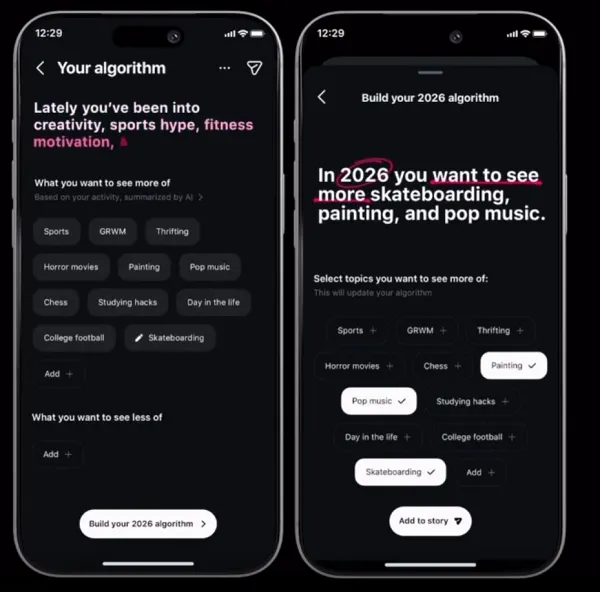
This rollout signals a shift toward more transparent and user-adjustable recommendations. Reels discovery is heavily driven by algorithmic ranking, so giving users an interface to correct or refine their “interest profile” can reduce frustration when the system misreads intent (for example, repeatedly showing a topic the user no longer wants). It also places Instagram alongside other platforms that are introducing more explicit controls over recommendations.
Overall, Instagram’s expanded “Your Algorithm” release strengthens user control over Reels by turning recommendation signals into something editable, not hidden, allowing people to actively tune their feed instead of relying only on passive engagement behavior.
IB : SocialMediaToday[1], InstagramLastYearUpdate[2], InstagramShowUpupdate[3], ReelsAlgorithm[4]
- Edits Gets IG Links, Weekly Ideas and New Video Effects Features[1]
Instagram has released the first 2026 update for Edits[2], its standalone video editing app, adding new linking tools, weekly idea prompts, additional effects, and storyboard improvements. The update is designed to help creators connect their content more directly to Instagram’s ecosystem while expanding the creative options available inside the editor.
What Changed
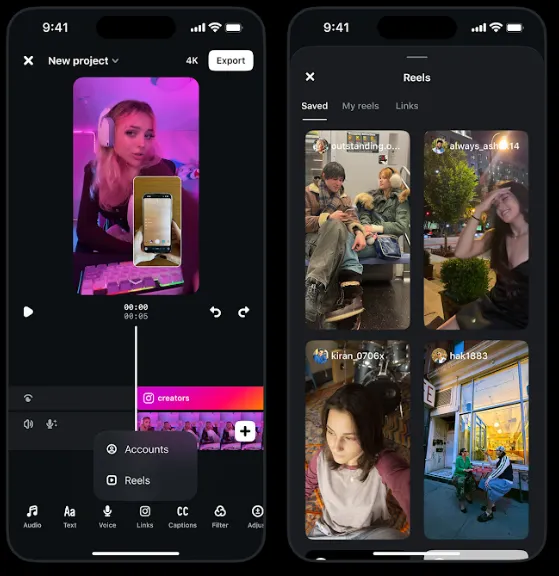
- IG and Reels links inside Edits projects
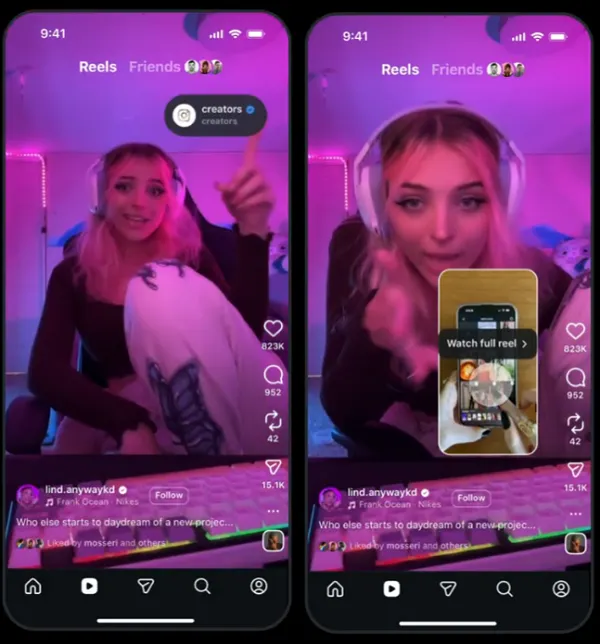
Creators can now add links within a clip while editing, making it possible to reference another Instagram account or a Reel. These links then appear when the clip is exported and uploaded to Instagram. The linking remains internal links cannot point to external websites.
- Weekly “ideas” prompts (10 per week)
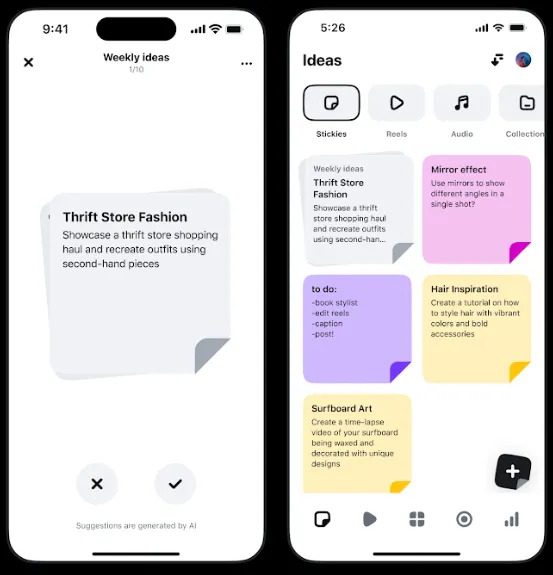
Edits will now generate 10 customized content ideas each week, based on the Reels a creator has previously shared. This is positioned as a consistency feature helping creators plan and keep posting without starting from zero each time. - 25 new video effects
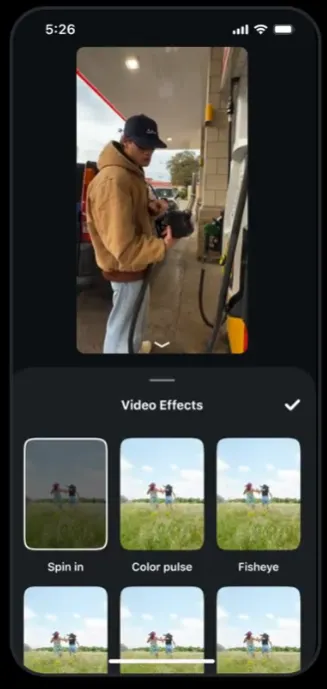
Instagram added 25 new effects, including options such as “bounce,” “fisheye,” and “blackout,” giving creators more style variations and trend-aligned visuals for short-form videos.
- Storyboard upgrades for better clip selection
Creators can now add multiple takes of audio and video clips into the storyboard, making it easier to compare versions and match segments before finalizing the edit.
Why It Matters
This update strengthens Edits as a creator-first companion to Instagram. Internal linking supports collaborations and cross-promotion without leaving the platform, while weekly ideas and expanded effects aim to reduce creative fatigue and speed up production. The storyboard changes also make the app more practical for creators who record multiple takes and want tighter control over final sequencing.
Overall, Instagram is positioning Edits as a more complete mobile workflow helping creators plan, style, and publish short-form content more efficiently, while keeping discovery and engagement anchored inside Instagram.
IB : SocialMediaToday[1], IGcreatorsUpdate[2]
- Meta Update
- Meta Signs Content Deal With Wikimedia To Power AI Projects [1]
Meta has joined a new set of Wikimedia Enterprise[2] partners, under agreements that provide large-scale, structured access to Wikipedia and other Wikimedia project data for use in commercial products and AI development. The Wikimedia Foundation describes the move as part of a broader effort to ensure that companies benefiting from Wikipedia’s volunteer-built knowledge also help sustain the infrastructure required to deliver it at global scale.
What Changed
- Meta added as a Wikimedia Enterprise partner (publicly announced): Wikimedia Enterprise announced Meta along with Amazon, Microsoft, Mistral AI, and Perplexity as newly formalized partners, disclosed for the first time in the announcement tied to Wikipedia’s 25th anniversary.
- Structured, high-throughput access (instead of scraping): Wikimedia Enterprise is positioned as a commercial access channel designed for high volume and speed, intended to serve large-scale reuse needs more reliably than ad-hoc crawling.
- Financial terms not disclosed publicly: Reporting notes that the Wikimedia Foundation did not provide specific financial details for the new deals, but framed them as business agreements to support sustainability.
How Wikimedia Enterprise Access Works
Wikimedia Enterprise describes several options for organizations that need Wikipedia content in structured formats and at scale:
- On-demand API: returns the most recent version of a requested article.
- Snapshot API: provides downloadable Wikipedia files per language, updated every hour.
- Realtime API: streams updates as they happen.
Wikimedia Enterprise also highlights that it can provide access beyond Wikipedia to other Wikimedia projects, and notes use cases such as knowledge graphs (including travel data) and retrieval-augmented generation (RAG) applications trained on educational material.
Why This Matters
Wikimedia is one of the most used reference sources on the web, and the Foundation argues that human-curated knowledge is especially valuable as AI systems increasingly reuse Wikipedia as a core dataset for answers and training. Wikimedia Enterprise states Wikipedia reaches a massive global scale tens of millions of articles across hundreds of languages while remaining nonprofit-run. In parallel, news coverage describes how AI-related bot activity and industrial reuse are increasing infrastructure strain and costs, strengthening Wikimedia’s case that large commercial users should access data through paid, structured channels rather than bulk scraping.
Overall, Meta’s Wikimedia Enterprise agreement reflects a wider shift toward licensed, high-throughput access[3] to Wikipedia for AI and product development. For Wikimedia, the arrangement is presented as a sustainability strategy maintaining free public access while ensuring that major technology companies contribute to the operational costs of distributing one of the internet’s most relied-upon knowledge resources.
IB : SocialMediaToday[1], wikimedia[2], OpenAI[3], OpenAIdisney[4],
- Meta Outlines How It’s Improved Reels Recommendations[1]
Meta has published a new explanation of how it is improving Reels recommendations by incorporating direct user feedback surveys shown inside the Reels feed. Instead of relying only on engagement signals such as likes, shares, and watch time, Meta says it is using in-context survey responses to better understand whether a Reel actually matches a person’s interests and then using those learnings to refine ranking. [2]
What Changed
- Large-scale in-feed feedback surveys
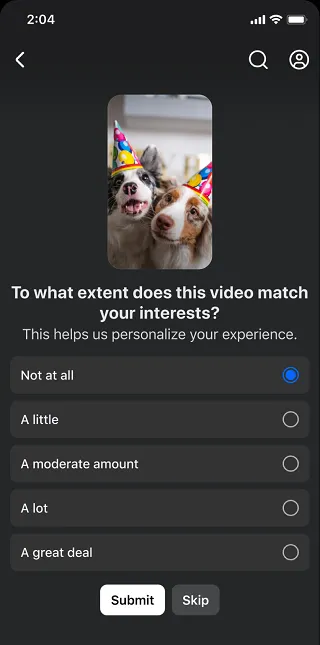
Meta is using prompts between Reels that ask users how they felt about the Reel they just watched (for example, whether it matched their interests). - Bias correction to improve reliability
Meta states it weights survey responses to correct for sampling and nonresponse bias, aiming to make the dataset better reflect overall user preferences. - Shift beyond “implicit” signals
The company frames this approach as a move beyond traditional engagement-only optimization, adding a stronger layer of “true interest” measurement.
How Meta Says It Works
Meta’s Engineering team describes the approach as the User True Interest Survey (UTIS) model. In practice, a portion of Reels viewing sessions are randomly selected to show a one-question survey (“How well does this video match your interests?”) on a rating scale. Meta then trains a lightweight “alignment” layer on top of its existing ranking predictions, using these survey responses as learning signals, and integrates the UTIS score back into ranking and retrieval. [3]
Reported Results
Meta reports that prior to using this method, its systems achieved 48.3% alignment with true user interests, but after implementing learnings from the survey-driven approach, alignment increased to more than 70%.
Why It Matters
If recommendation quality improves, the most visible change for users should be that Reels feel more personally relevant, with less over-reliance on generic “popular” content. Meta also notes that this method can help improve interest matching across dimensions beyond topic alone (such as style, mood, and other creative attributes), which can be difficult to capture through engagement metrics only.
Overall, Meta is positioning survey-based modeling as a practical way to improve Reels relevance by measuring “true interest” more directly. While Meta notes there is still work to do such as improving personalization for users with limited histories and increasing diversity the company frames UTIS as a key step toward recommendations that feel more accurate and satisfying over-time.
IB : SocialMediaToday[1], adaptingMetaFB[2], ImprovedmentQualityContent[3],