Instagram’s decision to open native content scheduling to all public accounts marks a meaningful shift in how the platform is treating early-stage creators and small publishers.
As Social Media Today reports, Instagram has expanded several creator tools that were previously tied to Professional Mode, including content scheduling, the insights dashboard, and access to trending audio tools. The change means users no longer need to convert to a professional profile just to begin planning posts natively inside the app and tracking how that content performs. (Social Media Today)
Key Takeaways
- Instagram has opened creator tools to all public accounts, including native content scheduling, performance insights, and trending audio access. (Social Media Today)
- The update is designed to help users access foundational growth tools earlier in their journey, before deciding whether to switch to Professional Mode. (Social Media Today)
- Some higher-tier tools still remain restricted by account type or follower thresholds, including monetization and certain advanced creator features. (Social Media Today)
- The move fits Instagram’s broader strategy of giving creators more in-app education, guidance, and analytics support through initiatives such as its Best Practices hub. (Facebook)
Instagram’s Scheduling Expansion Is Really About Lowering the Entry Barrier for Creators
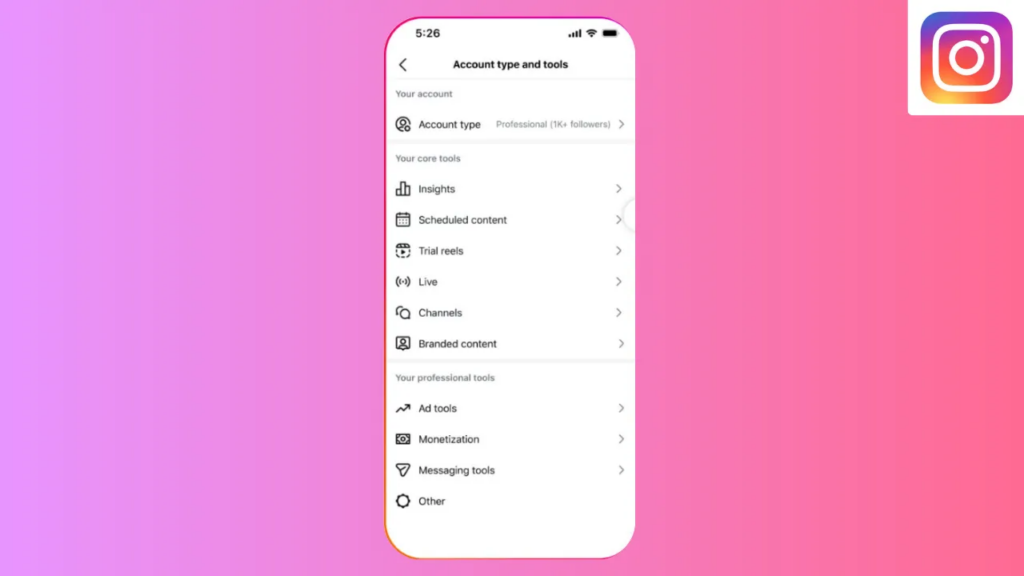
According to Social Media Today, Instagram has made a deliberate move to make creator-focused tools available to a wider group of users, rather than reserving them only for those who switch into Professional Mode. That is a notable policy adjustment because scheduling, insights, and trend visibility are not minor conveniences. They are core publishing tools that help users post more consistently, understand audience response, and participate in content trends with better timing. (Social Media Today)
In practical terms, this turns scheduling into a foundational feature instead of a semi-professional one. Until now, Instagram’s most useful publishing controls were tied more closely to business and creator workflows. By opening them to all public accounts, Instagram is signaling that structured publishing is no longer something reserved for established creators. It is being reframed as part of the standard creation process for anyone trying to grow on the platform. That is an inference from the feature expansion and Instagram’s stated goal of helping creators earlier in their journey. (Social Media Today)
Why Scheduling Matters More Than It May First Appear
Scheduling may look like a simple workflow feature, but in platform terms it changes how users approach content creation. Native scheduling reduces the friction of posting in real time, makes it easier to maintain consistency, and gives creators a more deliberate publishing rhythm. For smaller creators, side-hustle brands, and public-facing personal accounts, that can make the difference between reactive posting and a more intentional content strategy.
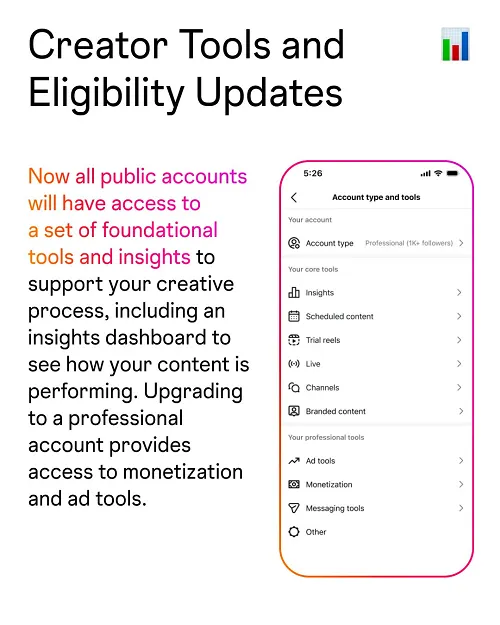
It also strengthens Instagram’s case for keeping users inside its own creative ecosystem. If scheduling, performance data, and trends discovery all happen natively, users have fewer reasons to rely on external tools for basic account management. This supports Instagram’s wider push to make the app a more self-contained workspace for creators, something Meta has been building toward through product updates focused on editing, insight, and creator education. (Facebook)
The Update Is Broader Than Scheduling Alone
One of the more important details in the rollout is that scheduling was not opened up in isolation. Social Media Today and Social Samosa both report that Instagram also extended access to the insights dashboard and trending audio tools. That matters because these tools work together: scheduling helps with planning, insights help with evaluation, and trending audio helps with discovery and relevance. (Social Media Today) (Social Samosa)
This combination suggests Instagram is trying to give public-account users a more complete starter toolkit rather than a single feature. In other words, the company is not only helping people publish in advance; it is helping them create with more context and learn from results more quickly. That fits with Instagram’s longer-term effort to educate users inside the app itself. Meta’s 2024 launch of the Best Practices hub, for example, was designed to provide creators with guidance on creation, engagement, reach, monetization, and guidelines, including advice on posting frequency, attention capture, and trending audio. (Facebook)
Instagram Is Still Preserving a Tiered Creator System
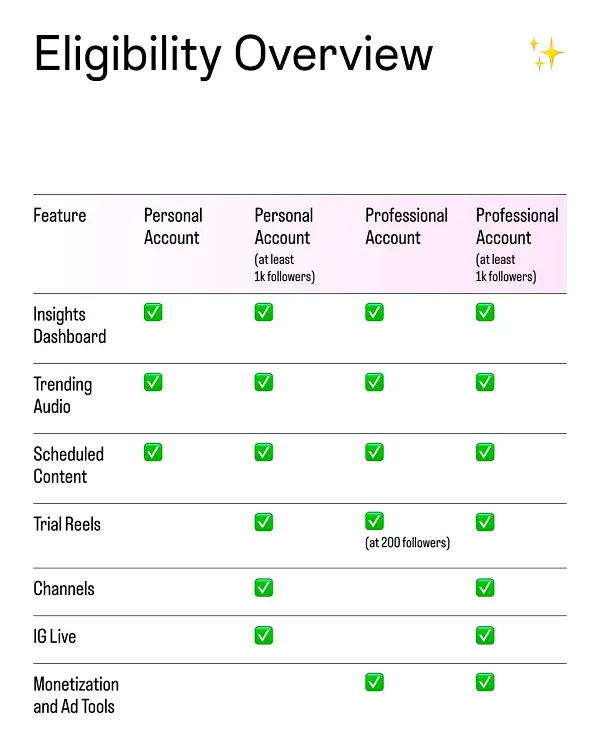
Even with this expansion, Instagram is not eliminating the distinction between casual public users and more established creators. Social Media Today notes that several options will remain exclusive to Professional Mode users or become available only after accounts reach certain follower thresholds. Newsweek’s coverage, which quotes Instagram’s own post about the change, says public accounts now get foundational tools and insights, while monetization and ad tools still require upgrading to a professional account. The same report says some other features remain dependent on follower count and account status. (Social Media Today)
That is strategically significant. Instagram is widening access without flattening the system entirely. It is giving users enough to begin taking publishing more seriously, while still reserving some features for those who commit to professional tools or achieve larger scale. The likely goal is to make the growth path feel more gradual and less intimidating. (Newsweek)
This Fits Instagram’s Broader Creator Product Strategy
The scheduling expansion does not stand alone. Meta has spent the past several years steadily turning Instagram into a more creator-operable platform. In late 2023, Meta announced new content-creation tools, deeper insights, and draft-management improvements, including the ability to preview drafts, rename them, and schedule them in advance. In 2024, it followed that with the Best Practices education hub in the professional dashboard, designed to help creators understand reach, engagement, monetization, and how Instagram’s systems work. (Facebook)
Seen in that context, opening scheduling to public accounts is less a one-off convenience and more a continuation of Instagram’s effort to normalize creator behavior earlier in the lifecycle. The platform appears to be building a ladder: first give users basic publishing and feedback tools, then introduce them to deeper guidance and, eventually, to monetization or professional features if they continue growing. That is an inference based on the sequence of Meta’s creator-product announcements. (Facebook)
What This Means for Creators, Brands, and Small Publishers
Practical implications
- Public accounts can now build a more disciplined posting workflow without switching immediately to Professional Mode. That lowers the barrier for creators who want to experiment seriously before committing to a professional setup. (Social Media Today)
- Scheduling is now part of a broader entry-level creator toolkit. Because insights and trending audio are expanding alongside it, users can plan, publish, and evaluate content more coherently. (Social Media Today)
- Instagram is giving early creators more autonomy while still protecting advanced features behind thresholds.This makes the platform more accessible without abandoning its tiered creator model. (Social Media Today)
- The change reduces dependence on third-party tools for basic publishing needs. That could be especially useful for freelancers, local businesses, and emerging creators managing content directly inside the app. This is an inference from the native rollout of previously gated functions. (Social Media Today)
Instagram’s expansion of native scheduling to all public accounts is a practical update, but it carries broader strategic meaning. The platform is making a clearer distinction between foundational creator support and premium creator infrastructure. By opening scheduling, insights, and trend tools earlier, Instagram is encouraging more users to behave like deliberate publishers from the beginning of their growth journey. For creators and public-facing brands, that makes Instagram feel less like a place where serious tools appear only after professional conversion, and more like a platform where serious content habits can start from day one. (Social Media Today)