- YouTube Updates Ad Placement Rules Related To Dramatic Content [1]
YouTube has updated its Advertiser-friendly content guidelines [2] to allow broader monetization for certain dramatized or discussion-based content that covers sensitive topics specifically when the treatment is non-graphic. Social Media Today reports that YouTube will now allow content focused on abortion, self-harm/suicide, and domestic or sexual abuse to earn full ad revenue when it is dramatized or discussed without graphic detail, reflecting YouTube’s effort to balance creator monetization needs with advertiser brand-safety expectations. [3]
What changed
- Non-graphic dramatizations can be fully monetized: YouTube indicates that “controversial issues” content can be eligible for ad revenue when the context is non-graphic and dramatized, updating an earlier approach that limited monetization even when the content was fictional or not explicit.
- Graphicness/detail now matters more in decisions: Social Media Today notes that YouTube previously did not treat the level of graphic or descriptive detail as a major factor for some dramatized material, but now it is using that context more directly to determine advertiser-friendliness.
- Key exclusions remain: YouTube’s official update page states that content focusing on child abuse or eating disorders remains ineligible for full monetization under these updates.
Why YouTube is doing this
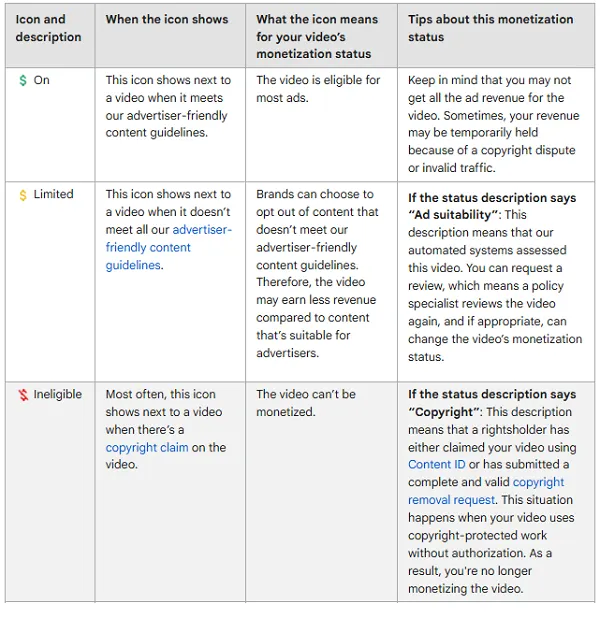
YouTube’s advertiser-friendly rules determine whether a video gets full ads, limited ads, or no ads, and policy boundaries around sensitive subjects have been a long-standing friction point for creators. The change is framed as a refinement: allowing responsible storytelling and topical discussions to monetize when they avoid explicit depictions, while still protecting advertisers from association with graphic or highly descriptive scenes.
Practical implications for creators and brands
- Creators producing documentaries, educational explainers, or scripted drama around sensitive topics may see fewer “limited ads” outcomes when content stays non-graphic and contextual.
- Advertisers may benefit from clearer separation between “sensitive but responsibly handled” content and content that is graphic or explicit, improving placement suitability while preserving reach.
Overall, YouTube’s update expands full monetization eligibility for non-graphic dramatized or discussion-based content on certain controversial issues, while keeping strict limits for particularly high-risk categories such as child abuse and eating disorders. The shift is aimed at reducing unnecessary demonetization of responsible storytelling while maintaining advertiser controls and safety standards.
- YouTube Updates Video Management Options on Mobile [1]
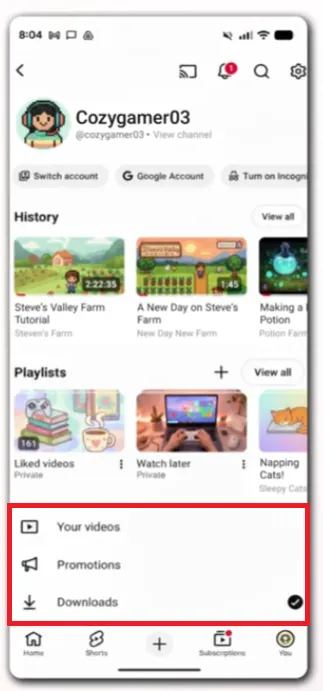
YouTube has updated how creators access and manage uploaded content on its mobile app, with the main goal of simplifying navigation and reducing friction during uploads, especially for Shorts. The update streamlines video management by consolidating entry points to the video list and shifting more management actions directly onto the channel page.[2]
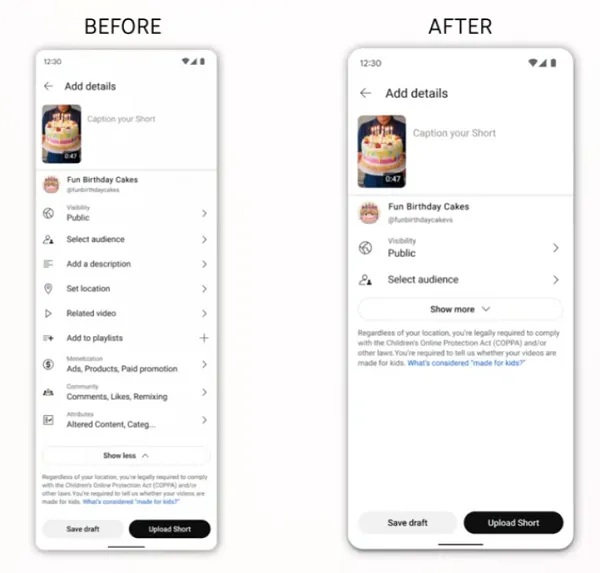
In addition, YouTube is testing a cleaner video settings screen during uploads by hiding expanded options behind a “Show more” menu to reduce clutter, while keeping key fields available when needed (including a product tagging field for creators in the YouTube Shopping program). [2][3]
What changed
- Video management entry points are being consolidated on mobile: YouTube is removing the separate “Manage videos” entry point and making “Your videos” the main path that takes creators to their channel page for content management.[2][3]
- Creators are redirected to the channel page after uploading: After video creation/upload, creators are directed back to the channel page so management happens within the channel tabs (Videos, Shorts, Live). [2][3]
- Upload settings are being simplified with a “Show more” expansion: YouTube is testing an updated upload settings layout that keeps the screen more minimal by placing expanded settings behind a dropdown (“Show more”). [2][3]
- YouTube Shopping creators retain prominent product tagging access: Creators in the YouTube Shopping program will still see a product tag field available in the streamlined settings experience. [2][3]
Why YouTube is doing this
YouTube’s mobile creator workflow has grown more complex over time, with multiple paths leading to similar management screens. The platform states the intent is to make mobile management more direct by centralizing actions on the channel page, reducing decision points and improving clarity for creators managing different formats (Videos, Shorts, Live).
For uploads, YouTube is aiming to reduce friction and confusion by presenting a lighter settings screen, while still allowing access to expanded controls when creators need them. [2][3]
Practical implications for creators and brands
- Faster, more consistent mobile workflow: Fewer entry points and a single central management location may reduce misnavigation and speed up routine management tasks (edits, checks, organization).
- More uploads may happen with fewer completed details: A simplified settings screen can reduce upload friction, but creators who rely on detailed metadata may need to be more intentional about opening expanded settings to avoid missing optimization fields.
- Clearer management across formats: Centralizing management under channel tabs aligns content operations across long-form videos, Shorts, and live streams within one mobile hub.
- Shopping-enabled creators retain monetization workflow support: The continued presence of product tagging supports creators who depend on shopping integrations, even as other settings are minimized.
YouTube’s update to video management options on mobile reflects a clear shift toward simplification and centralization of creator workflows. By consolidating video management into the channel page and reducing visual complexity during uploads, YouTube aims to make mobile content management more intuitive and efficient without removing access to essential controls. The approach balances ease of use for everyday creators with functional depth for those who require advanced settings, while maintaining support for monetization features such as YouTube Shopping. [2][3]
Overall, the update is designed to reduce friction in mobile content management, improve consistency across video formats, and support faster, more streamlined creator operations within the YouTube ecosystem.
- YouTube’s CEO Outlines Key Areas of Focus for 2026 [1]
YouTube CEO Neal Mohan has published his annual priorities for the year ahead, outlining the platform’s key focus areas for 2026 as YouTube continues to expand its role in entertainment, information, and creator-driven media. The update emphasizes that YouTube is increasingly viewed through the lens of connected TV viewing and mainstream media consumption, while also highlighting the growing importance of creator monetization and responsible use of AI tools.
Mohan’s 2026 priorities are organized around four main directions: (1) evolving entertainment with creators at the center, (2) strengthening YouTube as a better environment for kids and teens, (3) expanding the creator economy through more earning opportunities, and (4) advancing creativity with AI while improving protections against misuse and low-quality content.
What changed (key points from the 2026 focus outline)
- Entertainment strategy centers creators as “new studios” (especially on TV screens): YouTube is continuing to position creators as core entertainment drivers, aligned with YouTube’s growing presence in connected TV viewing and long-form consumption in the living room. [1][2]
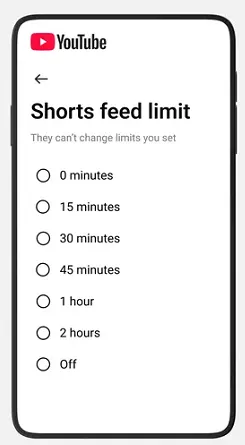
- Kids and teens are a major product and safety priority: Mohan highlights an increased focus on experiences and controls designed specifically for younger audiences, including stronger tools for parents and guardians. [2][3]
- More creator monetization paths and brand integration: The CEO outlines continued emphasis on expanding monetization, including new ways for creators to earn and improved connections with brands and commerce tools within YouTube experiences. [1][2][4]
- AI is framed as both a creative accelerator and a trust challenge: YouTube plans to expand generative AI creation capabilities, while also strengthening guardrails against deception, misuse, and low-quality repetitive content. [2][3][5]
Why YouTube is doing this
YouTube’s strategy reflects two realities of how the platform is used today:
- YouTube is competing directly with traditional entertainment and streaming on TV screens. The CEO’s framing leans into YouTube as a major destination for mainstream entertainment consumption, not only mobile viewing. [1][2]
- The creator economy is now inseparable from product design. YouTube’s ability to keep creators growing sustainably depends on monetization systems (ads, brand deals, shopping, subscriptions, and related tools) that work across formats like Shorts, long-form, and live.[2][4]
At the same time, YouTube acknowledges that AI brings a dual pressure: it can increase creative capability and scale, but it also increases the risk of spam, low-value content, and misleading or manipulated media, requiring stronger enforcement and safety systems.
Practical implications for creators and brands
- Creators may see more platform investment in TV-first formats and production value: The “creators as studios” direction suggests YouTube will keep developing features that help creators operate more like media businesses and serve audiences who watch on televisions.[2][4]
- Expect continued expansion of commerce and brand partnership tooling: Brands are likely to see more structured ways to work with creators, and more shopping and product-driven integrations inside YouTube viewing experiences. [2][4]
- AI-enabled creation will expand, but content quality controls will tighten: New AI tools may support faster production and experimentation, but YouTube’s stated emphasis on safeguards signals that enforcement against deceptive, spammy, or repetitive AI output will remain a platform priority.[3][5]
- More emphasis on youth protections and parental controls: Creators and brands operating in youth-adjacent categories should expect stronger controls and possibly more clarity around content experiences for younger audiences. [3][5]
Overall, YouTube’s 2026 focus as outlined by CEO Neal Mohan, reinforces a platform strategy built around creator-led entertainment (especially connected TV), expanded monetization and commerce pathways, stronger protections for kids and teens, and broader use of AI that is paired with tighter safeguards. The direction indicates YouTube is aiming to grow as a mainstream “TV-like” destination while maintaining trust, safety, and sustainable revenue opportunities for creators and advertisers.