LinkedIn is emerging as a major source for citations in AI-generated answers, especially through LinkedIn Pulse (Articles). Social Media Today reports that, based on multiple datasets, LinkedIn has become one of the most frequently referenced domains when tools like ChatGPT, Google’s AI features, and Perplexity provide sourced responses. [1][2][3]
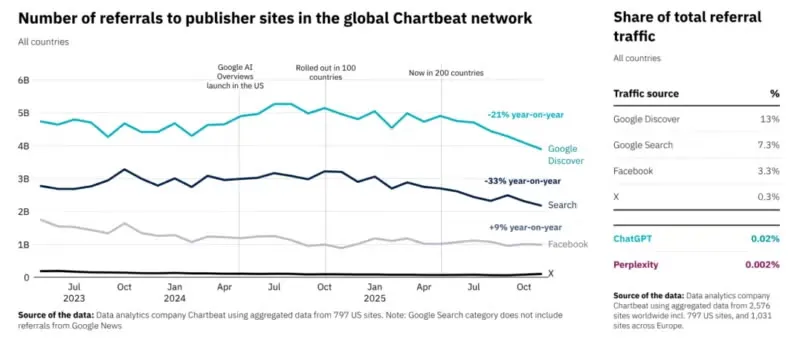
This development is being discussed in the context of declining referral traffic to many websites, as more searches are answered directly inside AI-driven search experiences. Social Media Today cites industry tracking that suggests Google search referrals to publishers have fallen notably since the wider rollout of AI previews, pushing marketers to focus not only on classic SEO but also on being present in the places AI systems pull from. [4]
What the data says
Two studies referenced in the coverage point to the same direction:
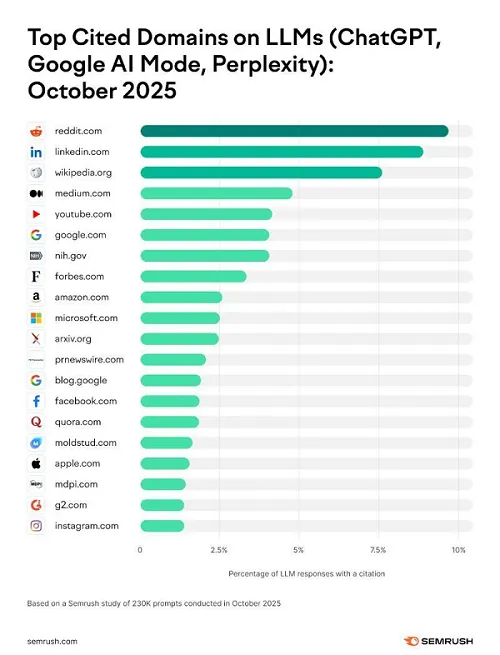
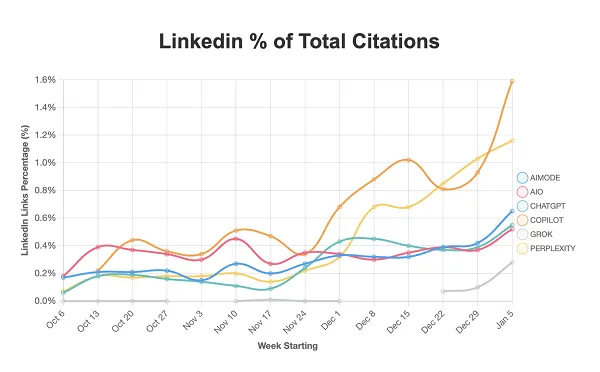
- Semrush (AI citation analysis): Semrush analyzed 230,000 prompts across ChatGPT Search, Google AI Mode, and Perplexity, using weekly snapshots over 13 weeks (July 14–Oct 12, 2025) and tracking 100M+ total citations. In its key takeaways, Semrush notes that Reddit and LinkedIn were among the top cited domains across the platforms measured, and it highlights a steady rise for LinkedIn during the study window. [5]
- Spotlight (LinkedIn citation lift): Spotlight’s Michael Hermon reports that, in the last three months measured in Spotlight’s dataset, ChatGPT cited LinkedIn 4.2× more, Perplexity 5.7× more, and the average across models was ~4–5× the usual rate. Of 19,202 LinkedIn sources cited, 15,000+ were from LinkedIn Pulse articles.[6]
Why LinkedIn Articles appear to be benefiting
The reporting emphasizes that AI tools may be leaning more on sources that are easier to interpret as “credible,” and LinkedIn content has built-in signals that many other sites don’t consistently provide, namely clear author identity and professional context. Spotlight explicitly links the rise to content tied to “real people with verifiable backgrounds,” and highlights Pulse as the dominant LinkedIn format being cited.
Practical implications for marketers
- Long-form LinkedIn publishing is now an AI visibility lever: If LinkedIn Articles are being cited more frequently, publishing strong explanatory content there can increase the chance a brand or spokesperson appears in AI answers.
- Pulse matters more than short posts (for citations): Spotlight’s numbers indicate the majority of LinkedIn citations come from Pulse/Articles, not standard feed posts.
- “Authority signals” may matter more than raw website SEO alone: With referral traffic under pressure, the incentive shifts toward creating content that AI systems can confidently reference, often where authorship and provenance are easier to validate. [7]
Overall, the current research signals that LinkedIn, especially Pulse Articles, is being cited substantially more often in AI-generated responses, making it a practical channel for brands and individuals who want visibility inside AI-driven discovery. The shift matters most because it overlaps with a broader decline in traditional search referrals, increasing the value of publishing in platforms that AI systems already trust and cite.