- Pinterest Announces New CTV Show [1]
Pinterest is expanding into connected TV with a new Roku series called “Bring My Pinterest to Life,” a six-episode program built around turning people’s saved Pinterest boards into real-world room, style, and DIY transformations. The show pairs well-known creators with everyday “Pinners” and follows a step-by-step “inspiration to realization” process, positioning Pinterest as both a planning tool and a practical execution platform.
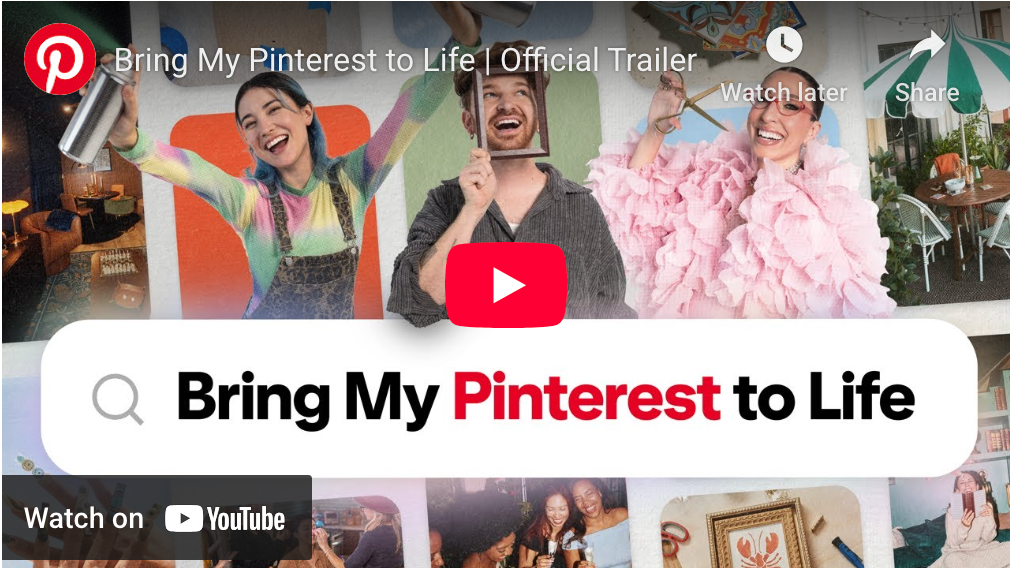
A key element of the series is its shoppable format. Rather than separating advertising into standard breaks, the show integrates brand partners and featured products into the storyline, with prompts intended to help viewers save ideas and purchase relevant items through Pinterest. Pinterest has confirmed brand integrations including Wayfair, eos, and Michaels. The series is set to debut in March 2026 on Roku.[2][3]
What Changed
- New Roku series launch: Pinterest announced a connected TV show designed to bring Pinterest boards to life as real transformations.
- Six-episode format with creator hosts: The show features creators Drew Michael Scott, Caroline Vazzana, and Tay BeepBoop Nakamoto working with participants to execute their saved inspiration.
- Shoppable, integrated brand storytelling: Brand partners (including Wayfair, eos, and Michaels) are embedded into the content rather than being placed as traditional ad breaks.
- Pinterest actions tied to viewing: Coverage indicates Pinterest plans prompts that connect the show to saving ideas and shopping actions within Pinterest.
Why It Matters
This move extends Pinterest’s core value proposition, inspiration that leads to action into a living-room viewing format, while opening a new surface for brand partnerships that connect content, product discovery, and measurable outcomes. It also aligns with Pinterest’s broader push into performance-oriented media, following its announced plan to acquire tvScientific, a connected TV performance advertising platform. [4]
Overall, “Bring My Pinterest to Life” positions Pinterest as more than an app-based discovery tool by translating saved ideas into tangible outcomes on CTV, supported by embedded commerce and brand integrations intended to shorten the path from inspiration to purchase.
- Pinterest Says Gen Z Users Are Finding Themselves in Pins [1]
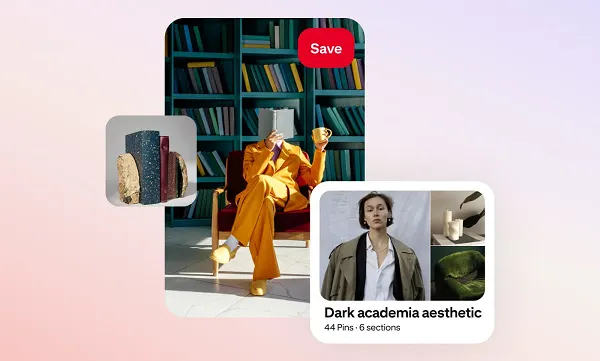
Pinterest is positioning itself as a discovery-first alternative for Gen Z audiences, arguing that its platform helps young users explore identity and personal taste without the pressure of “performing” for algorithmic feeds. In a January 12, 2026 update, Pinterest says Gen Z is increasingly trying to reclaim individual preferences in an online environment shaped by repeated trends, addictive scrolling patterns, and growing reliance on AI tools for decisions.[1][2]
Pinterest’s core message is that Gen Z wants more control and agency in discovery. The company says this matters for marketers because when people feel disconnected from their preferences, they become less confident in decision-making and purchasing. Pinterest cites internal and research findings showing that nearly half of Gen Z finds decision-making harder than the year before, and 48% say they buy more products they do not like or use signals Pinterest ties to “taste fatigue” and overly automated feeds.
What Pinterest Is Claiming
- Gen Z is now Pinterest’s largest cohort: Pinterest states Gen Z makes up more than 50% of its platform and is its largest and fastest-growing group.
- Trend fatigue is rising, but personalization is increasing: Pinterest cites research that nearly 1 in 4 Gen Zers and millennials who engage with trends avoid fatigue by “putting their own spin” on them, reflecting stronger demand for agency and customization.
- Discovery is visual-first for Gen Z: Pinterest reports 69% of Gen Zers agree visual results are more helpful than text or reviews when deciding what to buy, reinforcing Pinterest’s focus on image-led exploration.
- Pinterest markets itself as a “less performative” space: Pinterest argues its design supports more intentional exploration, describing the app as “quieter and slower,” and says people scroll ads 150% slower on Pinterest than on other social platforms.
How Pinterest Links This to Product and AI
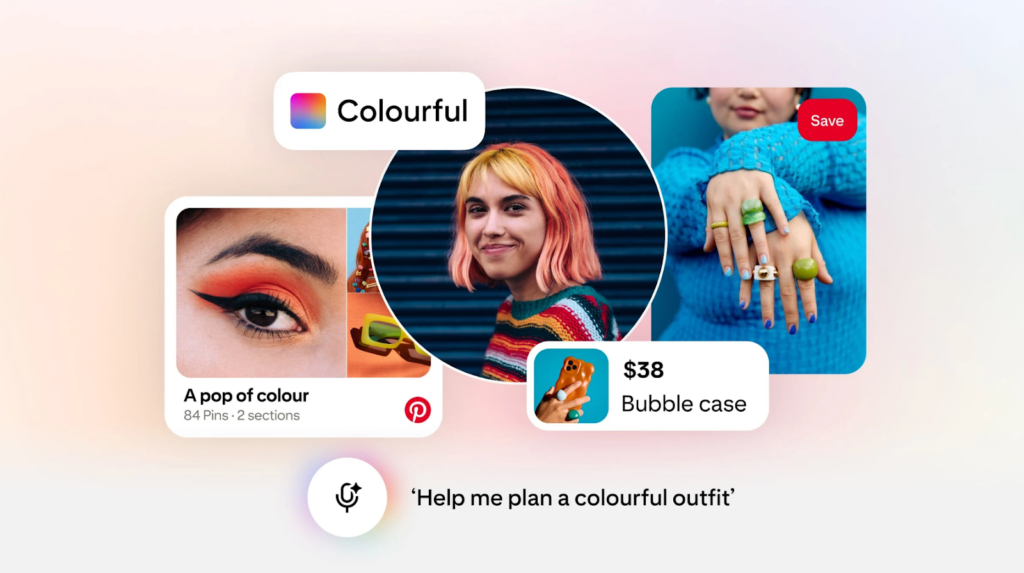
Pinterest says it uses AI to support discovery without “doing all the work” for users. It describes its Taste Graph as the foundation of its AI systems, built over years of training computer vision and image understanding to connect visual preferences and predict what content and products fit together. The company also references Pinterest Assistant(currently in beta and US-only), describing it as a visual-first, voice-forward tool that helps users explore options while keeping the user in control of the final decision.
Why It Matters for Marketers
Pinterest frames Gen Z behavior on the platform as “identity-building mode,” where ads and branded content can appear as part of discovery rather than interruption. It also cites that 71% of Pinterest users say Pinterest helps them discover products and ideas they would not normally encounter, supporting its pitch as a high-intent discovery environment.
Overall, Pinterest’s message is that Gen Z is seeking more intentional, visual, and personally guided discovery online. Pinterest is using this positioning to emphasize its value to marketers: a platform where users actively curate tastes and interests, and where branded content can align with exploration rather than compete against it.
- Pinterest Highlights Trending Colors for 2026 [1]
Pinterest has released its 2026 “Pinterest Palette”, a color trend forecast based on search and engagement signals inside the app. Social Media Today notes that the goal is to highlight shades that are gaining traction and likely to show up more across culture and social content in 2026.
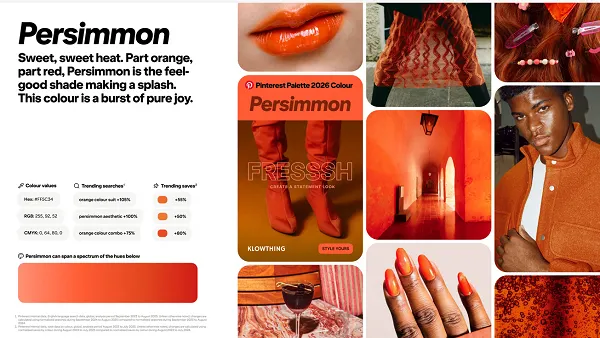
Pinterest’s 2026 Palette includes five colors: Cool Blue, Jade, Plum Noir, Wasabi, and Persimmon[2]. In Pinterest’s own framing (as quoted by Social Media Today), each color carries a distinct mood, ranging from the “unfiltered joy” of Persimmon to the “serenity” of Jade, positioning the palette as a bold, emotionally driven set rather than a neutral one.

What Changed / Key Data Points
- Report scope and method: Pinterest states the palette is grounded in internal data, using English-language search data (global) across an analysis period of September 2023 to August 2025, with year-over-year comparisons based on normalized search activity.
- Cool Blue momentum: Pinterest-linked metrics cited in coverage include searches for “cool blue” up 85% and “glacier aesthetic” up 35%, supporting Cool Blue as a calm, icy tone with rising interest.[3]
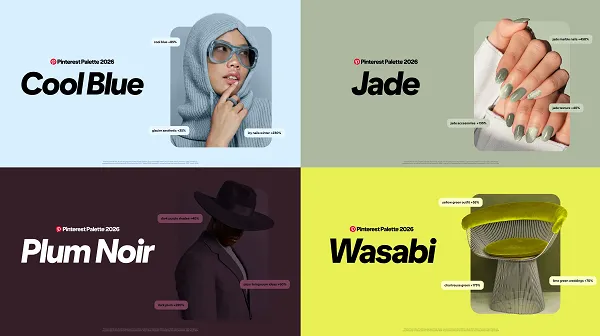
- Plum Noir’s dark-tone demand: Pinterest-linked signals show searches for “dark plum” up 220% and “deep burgundy” up 230%, reflecting stronger appetite for rich, moody shades in interiors and styling.[3]
- Wasabi’s electric green lift: Interest in “chartreuse green” increased by 175%, aligning with Wasabi’s role as the palette’s high-energy, high-contrast green.
- Persimmon’s warm, bold rise: Searches tied to the look and pairing of the shade rose as well, including “persimmon aesthetic” up 100% and “orange colour combo” up 75%.[3]
Why It Matters for Brands and Creators
Pinterest’s palette is designed to be applied across creative categories fashion, beauty, interiors, packaging, and social content, because color is often the first signal users process in a feed. Social Media Today also points out a practical limitation: brands with strict, established identity systems may not change core palettes, but they can integrate trending colors through seasonal assets, limited drops, or campaign variants without losing consistency.
Overall, Pinterest’s 2026 Palette signals a shift toward more expressive, emotionally “loud” color choices, supported by rising search interest in icy blues, deep plums, chartreuse greens, and bold orange-red combinations. For marketers, the clearest opportunity is to test these tones in creative variations, especially where discovery and aesthetic-led engagement matter—while keeping brand identity intact through controlled, campaign-level use.
- Pinterest Launches 2026 Planning Guide [1]
Pinterest has released a “Marketing Moments Guide 2026” as a planning resource for marketers, built around the idea that people on Pinterest plan seasons and milestones months before key dates. In its announcement, Pinterest emphasizes that seasonal searches (from outfits to travel to party planning) build early momentum and function as “signals of intent,” which is why it recommends launching campaigns earlier than the calendar moment itself.[2]
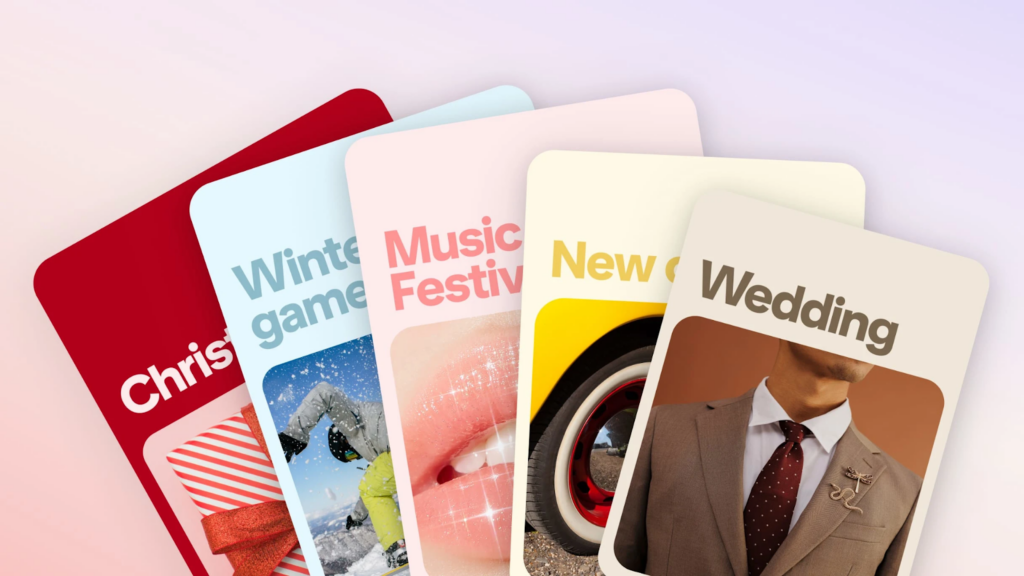
Pinterest also uses the guide to reinforce its commerce positioning. The company states it has a global audience of 600 million monthly active users, and says their No. 1 reason for coming to Pinterest is to shop, using Pins and boards to save finds and return later to purchase. The PDF guide further includes consumer research references such as 90% of Pinterest users saying they’re more likely to follow through with purchasing something they discovered on Pinterest, and 70% saying they find products relevant to them on Pinterest (with cited sources in the document).
What the 2026 Planning Guide Includes
Pinterest organizes planning opportunities into three event types, each with different marketing timing and creative angles:
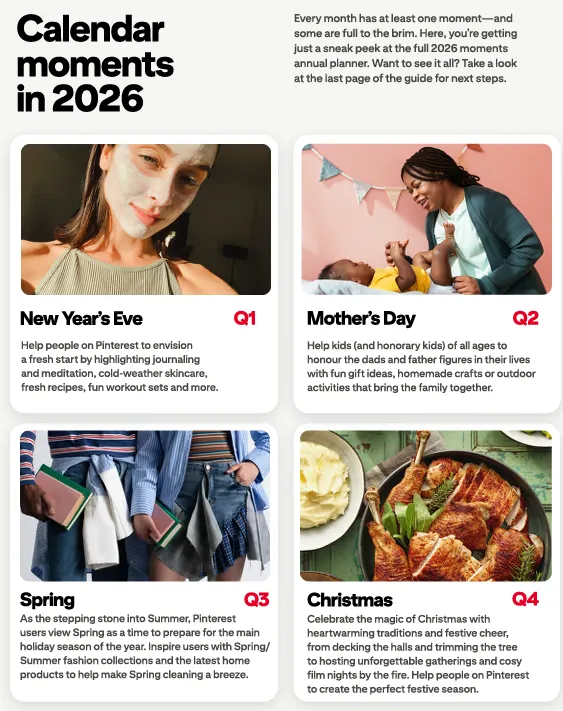
- Calendar moments: Fixed dates (e.g., New Year’s, Valentine’s Day, Black Friday/Cyber Monday, Christmas, plus cultural and religious celebrations such as Lunar New Year, Diwali, and Ramadan).
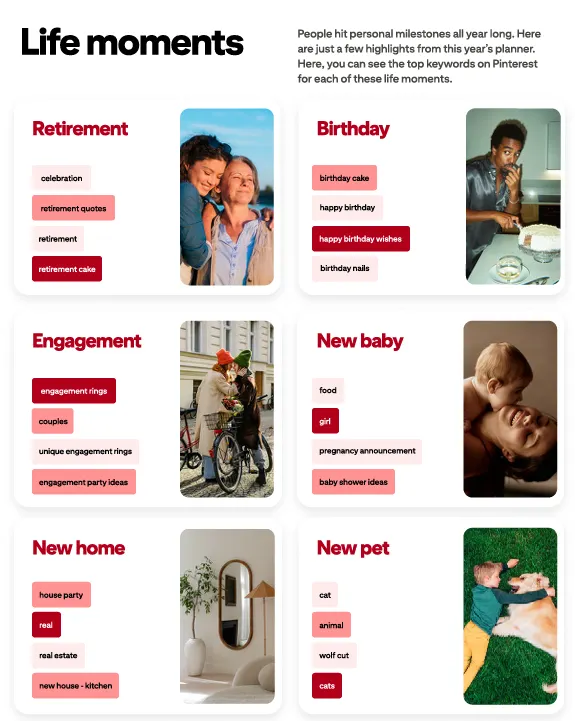
- Life moments: Personal milestones like birthdays, weddings, graduations, moving house, new baby, new pets, retirement, and more often paired with planning keywords and behaviors.
- Big moments: Major events that occur less frequently and generate broad cultural momentum. The 2026 guide references major sporting events including worldwide football tournaments and the Olympic Winter Games, alongside the related planning behaviors (watch parties, outfits, travel, décor, food ideas).
Planning Tips Pinterest Emphasizes
Across the blog post and the PDF guide, Pinterest repeatedly highlights that “on time” can be too late if audiences started planning earlier. It recommends building for discovery during the planning window and staying present through the full ramp-up period. Key suggested actions include:
- Use Pinterest Trends to identify rising search signals and align keywords and creative early.
- Apply always-on planning concepts (everyday rituals and recurring needs), not only major holidays.
- In the PDF guide’s “activate all year long” section: review creative best practices, align with what’s trending, and use Pinterest Performance+ to support stronger campaign outcomes and reduce time spent launching and scaling campaigns.
Why It Matters
The guide is designed to help brands map campaigns to real planning behavior, especially for categories where users save ideas and build intent over time (home, fashion, food, travel, gifting, life milestones). Pinterest’s core argument is that marketing moments begin when planning begins, and that early visibility in search-led discovery can influence what people later choose to buy.
Pinterest’s 2026 Planning Guide positions the platform as a high-intent environment where seasonal and milestone planning starts early. By dividing opportunities into calendar, life, and big moments, and pairing those with timing guidance, keywords, and trend tools. Pinterest is encouraging marketers to plan earlier and structure campaigns around discovery behaviors that precede purchase decisions.[2]