Pinterest’s new best-practices tip sheet for shopping templates suggests that product-feed advertising is no longer enough on its own. [1]

In coverage published by Social Media Today, Pinterest’s latest guidance argues that brands need more thoughtfully designed shopping templates if they want product Pins to stand out in a feed shaped by search intent, visual context, and purchase-minded discovery. The message is clear: lower-funnel creative on Pinterest should not feel like a stripped-down catalogue entry, but like a continuation of the brand and decision journey. (Social Media Today)
Key Takeaways
- Social Media Today says Pinterest’s new tip sheet is aimed at helping brands improve the presentation of product Pins and capture more attention in-feed. (Social Media Today)
- Pinterest’s own blog says shopping templates should sit at the center of lower-funnel strategy, not as an afterthought once upper-funnel storytelling is done. (Pinterest)
- The platform argues that people shop in ideas, moods, and use cases, not just by scrolling through product grids. (Pinterest)
- Pinterest says more than half of people on the platform use it to shop, and its visual search model is 30% more likely to identify and recommend relevant content than leading off-the-shelf models. (Pinterest)
- Pinterest also points to a DFS campaign executed with Smartly, saying template-led creative helped generate 800+ tailored ads and a 114% increase in ROAS. (Pinterest)
Pinterest’s New Guidance Is Really About Fixing the Weakest Part of Retail Creative
According to Social Media Today, Pinterest’s new tip sheet focuses on a common creative gap in retail advertising: brands often invest heavily in upper- and mid-funnel storytelling, then rely on plain feed-based product shots when shoppers are actually close to making a decision. The article quotes Pinterest’s argument that many advertisers default to “packshot, price, minimal context” in shopping ads, even though that is the stage where creative should still be helping the buyer decide. (Social Media Today)
Pinterest’s own business blog makes the same point more directly. It says retail media has become highly automated in terms of feeds, bidding, and delivery, but the ads themselves often remain visually blunt. In Pinterest’s view, that sameness weakens lower-funnel performance because products begin to look generic just when users are comparing options and deciding what fits their taste, use case, or priorities. (Pinterest)
Why Shopping Templates Matter More on Pinterest Than on Some Other Platforms
Pinterest’s argument rests on how people use the platform. In its official blog, the company describes Pinterest as a “visual search platform designed for decisions,” where users search around ideas such as outfits, room layouts, hosting, or seasonal moments rather than starting with a specific SKU. That means the creative surrounding a product matters because shoppers are often evaluating not only what the item is, but how it fits into a broader mood, scenario, or plan. (Pinterest)
That positioning is reinforced by Pinterest’s shopping hub, which says the No. 1 reason people use Pinterest is to discover new brands and products, and that people who use Pinterest weekly shop more often and spend more every month. The same page also frames shopping as native to the overall Pinterest experience rather than limited to a single storefront tab, which helps explain why contextual, visually coherent templates are so important in the feed. (Pinterest)
What Pinterest Says Brands Should Actually Do

Pinterest’s guidance points to three main changes in approach.
1. Treat templates as part of the brand system, not just production output
Pinterest says brands should stop treating template-based shopping ads as mechanically generated units pulled straight from the product feed. Instead, templates should carry brand cues, tone, and value propositions into the lower funnel so that products feel like a natural continuation of earlier storytelling. In practical terms, the company is advising advertisers to use templates to maintain identity and context even at scale. (Pinterest)
2. Design for ideas and use cases, not just inventory
Pinterest says static product grids often miss the way users actually browse. In its view, users search around themes, occasions, and goals, while Pinterest’s AI maps visual and semantic signals to relevant products in a catalog. That is why the company recommends building templates around real planning behavior and using Pinterest Trends to identify the ideas and search themes gaining momentum in a given market. (Social Media Today)
3. Build creative systems that can respond quickly
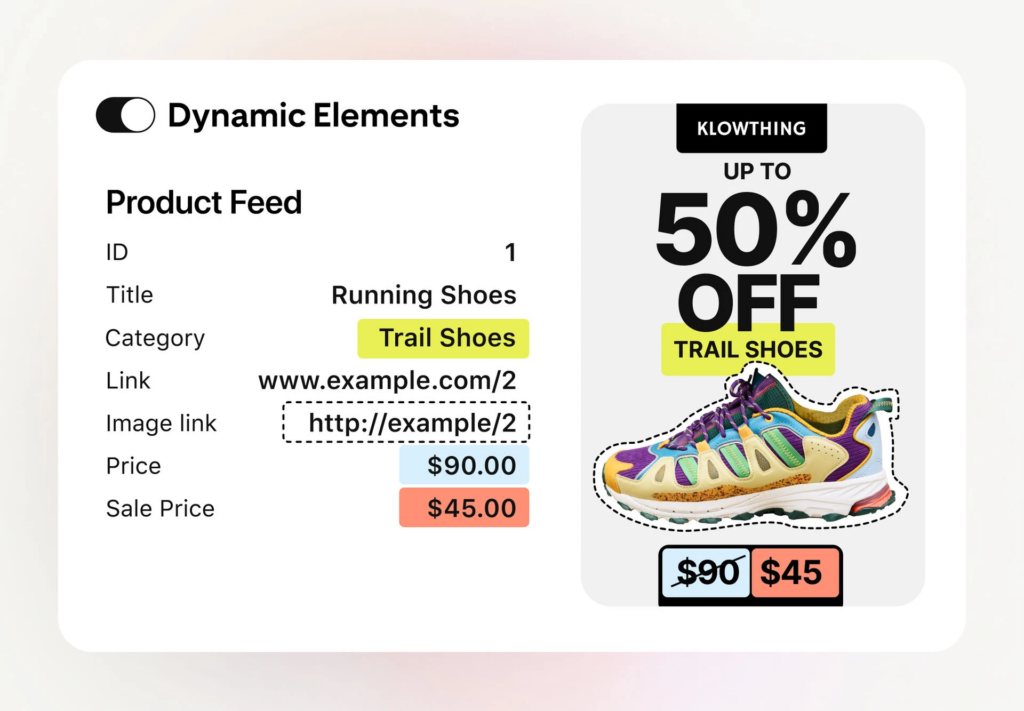
The company also argues that automation has transformed media faster than it has transformed creative. Many teams still build assets one campaign at a time, which makes it harder to react to seasonality, promotions, inventory changes, or shifts in shopper mindset. Pinterest’s answer is scalable template systems, including tools such as Overlays, which it says are being tested and rolled out more broadly to help advertisers update branding, offers, or promotional emphasis without rebuilding creative from scratch. (Social Media Today)
The DFS Example Shows Why Pinterest Is Framing Templates as a Performance Tool
A major part of Pinterest’s case is the DFS example featured in both the official blog and the coverage by Social Media Today. Pinterest says the UK retailer used template-driven creative through Smartly to make Sponsored Pins stand out and improve performance. In Pinterest’s version of the case, DFS generated more than 800 tailored ads, driving a 114% increase in ROAS and 2.9x site traffic. (Social Media Today)
Smartly’s own case study supports the broader claim. It says DFS created more than 800 new creative variations and increased ROAS by 114%, while also reporting a 286% lift in traffic. Smartly attributes the improvement to image templates that made it possible to scale creative variations efficiently and introduce dynamic promotional elements such as delivery callouts and limited-time offers. (smartly.io)
What This Means for Retail and E-Commerce Marketers
Pinterest’s template guidance matters because it shifts the conversation away from simple catalog connectivity and toward creative quality inside commerce media. The platform is effectively arguing that feed automation alone does not solve the problem of persuasion. If shopping ads still look generic, they may show up, but they are less likely to help a shopper choose. That is especially important on Pinterest, where discovery often happens through inspiration-led search rather than direct product lookup. (Pinterest)
Practical implications for brands
- Lower-funnel creative needs the same strategic attention as upper-funnel brand work. Pinterest’s guidance suggests that shopping ads should continue the brand story rather than strip it away. (Pinterest)
- Templates should be built around shopper intent, not only product data. Pinterest’s examples emphasize themes, use cases, and planning signals rather than simple item display. (Pinterest)
- Scalable systems matter more than one-off creative production. The company’s recommendation around Overlays and template systems is ultimately about speed, adaptability, and relevance. (Pinterest)
- Pinterest is positioning shopping ads as part of a decision journey. That makes template design a performance issue, not just a visual one. (Pinterest)
How This Fits Pinterest’s Broader Commerce Strategy
This guidance also fits Pinterest’s larger push to frame itself as a shopping platform built around intent. Its shopping hub says people come to Pinterest already primed to discover brands and products, while the company’s template blog argues that creative should be designed for how people decide, not just for how a catalog renders. Taken together, that suggests Pinterest is trying to turn shopping ads into a more contextual and visually native commerce format rather than a standard performance ad unit transplanted from other channels. (Pinterest)
Pinterest’s new shopping-template guidance is ultimately a best-practices push, but it also reflects a wider change in digital retail advertising. Product feeds, automation, and catalog scale are no longer enough if creative fails to match the way people actually browse and decide. Pinterest is arguing that templates should do more than organize products; they should translate brand identity, shopper intent, and contextual relevance into lower-funnel creative. For retailers and e-commerce advertisers, that makes shopping templates less of a production convenience and more of a strategic performance asset. (Social Media Today)