- TikTok Launches New Ad Options for Streaming Providers[1]
TikTok has introduced new advertising solutions designed specifically for streaming services and entertainment brands, expanding its performance marketing tools for filma and TV promotion. According to Social Media Today, the update includes a new Streaming Ads format that directs users into a subscription flow from the TikTok feed, alongside a complementary release-focused format called New Title Launch. [1]
TikTok positioned the launch around the platform’s growing role in entertainment discovery, pointing to high daily activity across film and TV content and increased posting momentum in related communities. The company also tied the launch to its presence at the 2026 Sundance Film Festival, where it planned to showcase these tools with creators and industry programming. [1][2]
What changed
- TikTok introduced “Streaming Ads” as a performance solution for streaming services:
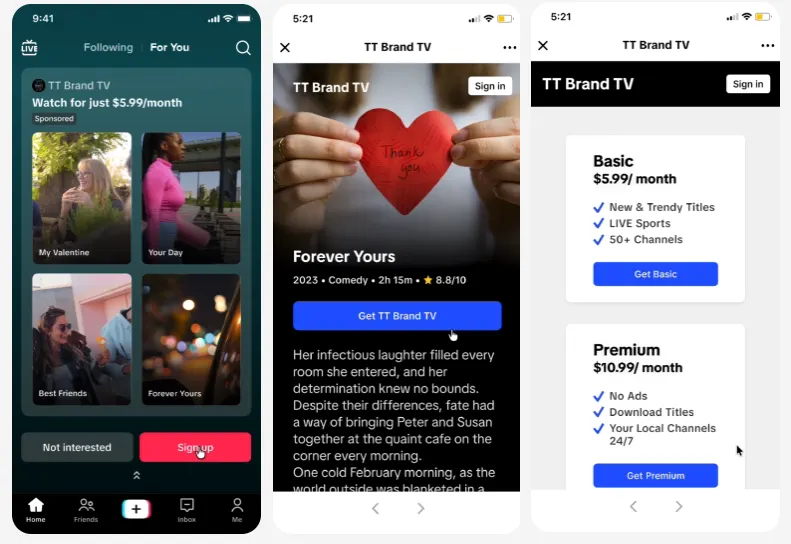
Streaming Ads are presented as a conversion-focused ad product intended to turn entertainment discovery into subscription actions. TikTok states that the format is powered by Smart+ and is designed to deliver personalized experiences to users who have shown interest in entertainment-related content. [1][2][3] - Streaming Ads are built around catalog-driven delivery and two immersive formats:
TikTok’s product documentation describes Streaming Ads as a catalog-fueled solution that pairs “high-intent” audiences with relevant titles from an advertiser’s content library. TikTok lists two primary creative formats:- Multi-Show Experience: an auto-play carousel featuring four video tiles pulled from a streaming provider’s catalog. [2][3]
- Media Card: an interactive add-on layered on video that highlights multiple catalog titles and can include fields such as genre and other customizable metadata; TikTok notes that it auto-scrolls to new cards during the experience. [3]
- TikTok launched “New Title Launch” for major releases and tentpole moments:
TikTok described New Title Launch as a performance solution intended for high-impact events such as season premieres, franchise drops, and marquee releases, designed to increase subscriptions and ticket sales by reaching “high-intent” audiences. [1][2][4] - Targeting and optimization rely on intent signals and automated delivery:
TikTok stated that New Title Launch can use signals such as favorite movie genre and pricing sensitivity, while Streaming Ads leverage Smart+ automation to optimize bidding and title selection based on predicted conversion and click-through performance. [1][3]
Why TikTok is doing this
TikTok framed the update as a response to sustained entertainment engagement on the platform and to increasing demand from entertainment advertisers for tools that link discovery to measurable outcomes.
TikTok’s published materials cite platform-level usage and discovery indicators, including:
- An average of 6.5 million posts per day about film and TV shared on TikTok (2025 figure cited by TikTok). [1][2]
- TikTok claims that 4 in 5 users say TikTok inspires their streaming choices and encourages them to explore more content. [2][3]
- Social Media Today’s reporting that #FilmTok and #MovieTok posting activity increased in 2025 (as presented in TikTok’s materials). [1]
Marketing and industry coverage also characterized the move as TikTok strengthening its position as a performance channel for entertainment marketers, aligning ad formats with subscription acquisition and release marketing objectives. [4][5]
Practical implications for streaming providers, studios, and advertisers
- Direct response pathway from discovery to subscription:
Social Media Today reported that Streaming Ads are designed to guide viewers into a subscription flow from the TikTok feed, signaling a more conversion-oriented approach to entertainment advertising on the platform. [1] - Catalog-driven creative supports always-on acquisition and launch peaks:
TikTok’s description emphasizes scalable delivery through an entertainment catalog inside Ads Manager, allowing automated optimization and personalized title selection, while New Title Launch is positioned for high-pressure promotional windows tied to major releases. [3][4] - Performance claims are framed through TikTok’s internal testing and platform data:
TikTok’s product post states that in early testing, 80% of Streaming Ads campaigns outperformed non-Streaming Ads campaigns, and it also reports that 60% of New Title Launch promotions outperformed advertisers’ stated CPA goals during a cited observation period (as described in TikTok’s documentation). [3]
These are presented as TikTok’s internal results and should be interpreted as platform-reported performance metrics rather than independent benchmarking.
Overall, TikTok’s launch of Streaming Ads and New Title Launch extends its entertainment advertising toolkit toward conversion outcomes, combining catalog-based personalization with performance optimization and launch-specific targeting. The rollout reflects TikTok’s continued investment in entertainment discovery behavior and its effort to translate that behavior into measurable subscription and sales results for streaming platforms and studios. [1][2][3][4].
- TikTok Adds More Control Options to Smart+ Campaigns [1]
TikTok has rolled out new updates to its AI-powered Smart+ campaign suite, adding more advertiser controls focused on creative selection, visibility into ad combinations, and campaign management workflows. Social Media Today reports that the update introduces Auto-select creative, expanded ad previewing for Smart+ creative combinations, and additional editing features such as duplication, draft mode, automated rules, and bulk editing bringing Smart+ closer to the tooling available in manual campaigns. [1]
TikTok has also published an updated Smart+ guide that outlines how the upgraded Smart+ experience works and how advertisers can set up both fully automated and manual campaigns within a unified creation flow. [2][3]
What changed
- “Auto-select” creative added to Smart+ (creative selection control):
Social Media Today reports that TikTok is adding “Auto-select” to Smart+, which scans an advertiser’s existing ads and eligible creator content from TikTok One, then recommends creatives predicted to perform best for the brand’s campaign goals. [1]
TikTok’s Smart+ product post describes Auto-select as part of “Creative for Smart+,” and notes it can surface pre-approved creator content, with TikTok handling creator payment and logistics (as described by TikTok). [4] - Smart+ ad previews expanded (visibility before launch):
TikTok states that Smart+ now lets advertisers preview “every possible creative combination” before ads go live, directly inside TikTok Ads Manager, to support review, error-checking, and faster iterations. Social Media Today highlights this as a key update aimed at improving visibility into what will actually run. [1][4] - More workflow controls added (duplication, draft mode, automated rules, bulk editing):
Social Media Today reports that TikTok is bringing common manual-campaign tools into Smart+ including duplication and bulk editing, so advertisers can iterate faster while still using automation. [1]
TikTok’s Smart+ product post also lists these as “Upgraded efficiency tools” intended to reduce manual work and improve day-to-day execution for Smart+ campaigns. [4] - Smart+ experience framed as increasingly “fine-tunable” (partial automation supported):
TikTok’s Business Help Center explains that manual and Smart+ creation have been unified into a single flow and that advertisers can tailor campaigns to full automation, partial automation, or fully manual, with more targeting/placement options and creative controls in the upgraded experience. [5]
Why TikTok is doing this
TikTok has positioned Smart+ as a performance advertising system built around automation, with controls intended to make automated buying more predictable and manageable for advertisers. In its Newsroom announcement, TikTok described the direction as “automation you can finetune,” emphasizing modular control across targeting, creative, and budget, alongside workflow simplification. [6]
From a product design standpoint, the updates directly address a frequent advertiser concern with automated campaign systems: performance gains may come with reduced visibility or fewer levers. The new previews and creative selection tools are presented as a way to preserve automation benefits while improving oversight of what creative combinations and inputs are being deployed. [1][4]
Practical implications for advertisers and agencies
- Creative testing becomes more scalable without fully manual setup:
Auto-select and combination previews are designed to expand creative variation and selection inside Smart+ while reducing manual evaluation time, particularly for advertisers running many assets. [1][4] - Faster iteration and safer approvals:
Previewing creative combinations before launch can help teams catch mismatched text/creative pairings and reduce internal approval friction, particularly in regulated or brand-sensitive categories. [1][4] - Operations efficiency improves for larger accounts:
The expansion of duplication, draft mode, automated rules, and bulk editing supports higher-volume workflows in Ads Manager useful for agencies and advertisers managing multiple campaigns and asset groups. [1][4][3] - Advertisers may need to review how automation interacts with controls:
TikTok’s Smart+ materials repeatedly frame controls as “optional” and automation as optimization-driven, meaning advertisers still need to validate how creative selection and delivery behave relative to brand requirements and measurement expectations. [4][5]
Overall, TikTok’s latest Smart+ updates expand advertiser control in three main areas: creative selection, visibility into creative combinations, and campaign workflow management. The changes reflect TikTok’s broader effort to make automation more usable at scale, maintaining AI-driven optimization while giving advertisers clearer oversight and more familiar operational tools inside Ads Manager. [1][4][5][6].