- TikTok Still Faces Expulsion From the US [1]
TikTok continues to face the possibility of being banned from the United States, despite previous efforts to avoid expulsion through government negotiations and proposed divestiture agreements. According to Social Media Today, uncertainty remains because no publicly confirmed deal has been finalized or officially communicated by TikTok or its parent company ByteDance that would satisfy U.S. national security requirements. [1]
Under U.S. law, TikTok must fully divest from its Chinese ownership or face removal from American app stores and services due to concerns over data security and foreign influence. Lawmakers have repeatedly extended enforcement deadlines, but definitive resolution has not yet been publicly confirmed. [1]
What continues to unfold
- Uncertainty over official divestiture status: Although the Trump administration previously announced a proposed deal that would transfer control of TikTok’s U.S. operations to a U.S.-based entity to comply with the Protecting Americans from Foreign Adversary Controlled Applications Act, TikTok and ByteDance have not publicly confirmed that any such deal has been finalized. [1]
- National security law requirements remain: The federal law in question requires ByteDance to sever control of TikTok’s U.S. operations by mandated deadlines or face a ban, based on concerns about potential surveillance or influence by foreign adversaries. [1][2]
- Extensions of enforcement have kept TikTok operational: While enforcement deadlines have been extended multiple times by executive decisions, the legal requirement to resolve ownership issues remains in force. [1][2]
Why TikTok faces expulsion
TikTok’s potential removal from the U.S. stems from the Protecting Americans from Foreign Adversary Controlled Applications Act [4][5], a federal law that defines certain apps controlled by “foreign adversaries” as national security threats unless control is divested. The law was enacted in April 2024 and requires qualified divestiture of ByteDance’s control or face a nationwide ban. [1][2]
In January 2025, the U.S. Supreme Court upheld this law, affirming its constitutionality and leaving enforcement decisions to the executive branch. [3] The government’s concern centers on the volume of U.S. user data and potential access by Chinese authorities through TikTok’s parent company. [1][2]
Practical context and implications
- Creators and users remain in limbo: Without clear public confirmation of a resolved deal, TikTok’s future in the U.S. remains uncertain for creators, businesses, and advertisers who rely on it for distribution and monetization.
- National security concerns persist in policy debates: Lawmakers and regulators continue to emphasize data security risks tied to foreign ownership, influencing discussions about long-term regulatory frameworks for social platforms. [1][2]
- Legal and political uncertainty may impact operations: The lack of confirmed divestiture details contributes to ongoing speculation about enforcement timing, potential ban enforcement, and how future legal challenges or extensions might shape TikTok’s continued presence. [1][2]
Despite repeated extensions to enforcement deadlines and negotiations between TikTok/ByteDance and U.S. authorities, the platform still faces the possibility of expulsion from the U.S. market because no official, publicly confirmed divestiture or sale agreement has been communicated that satisfies the legal requirements set by national security legislation. The enforcement of the Protecting Americans from Foreign Adversary Controlled Applications Act and the Supreme Court’s upholding of that law underscore the ongoing risk that TikTok may be removed from U.S. app stores if ownership concerns are not fully resolved. [1][2][6]
- TikTok Confirms Joint Venture To Comply With US Law [1]
TikTok has officially confirmed the formation of a new U.S.-based joint venture designed to comply with the Protecting Americans from Foreign Adversary Controlled Applications Act and ensure that the short-form video platform remains available to American users. According to Social Media Today, the newly established TikTok USDS Joint Venture LLC [2] will operate under defined security and governance safeguards to address U.S. regulatory requirements and national security concerns.
The announcement confirms that this entity will be majority-American owned, operate with a focus on data privacy, algorithm security, content moderation, and trust and safety policies, and allow more than 200 million U.S. users and 7.5 million U.S. businesses to continue using TikTok without needing to download a separate app.[2] [3]
What changed
- New U.S. joint venture established: TikTok has formed TikTok USDS Joint Venture LLC, a separate U.S. corporate entity created to comply with the 2024 national security law and the Executive Order signed in September 2025. [2] [3]
- Majority American ownership with multiple investors: The joint venture is backed by American and global investment partners. Major stakeholders include Silver Lake, Oracle, and MGX (each holding a significant stake), while TikTok’s Chinese parent company ByteDance retains a 19.9% share, remaining below the 20% foreign ownership threshold specified under U.S. requirements. [2]
- Data protection, algorithm security, and content oversight: TikTok states that the U.S. joint venture will secure U.S. user data by hosting servers in a secure U.S. cloud environment (Oracle), retraining the content recommendation algorithm using U.S. data, and applying robust moderation, safety policies, and third-party compliance checks. [2]
- No new app download required: TikTok has confirmed that U.S. users will not need to install a new application to continue using the service after the joint venture takes effect, maintaining continuity for creators, advertisers, and users. [2]
Why TikTok is doing this
TikTok’s move comes after years of regulatory pressure in the United States tied to national security and data privacy concerns linked to its Chinese parent, ByteDance. Under the Protecting Americans from Foreign Adversary Controlled Applications Act, foreign-controlled apps classified as national security threats must divest certain operations or face removal from U.S. app stores.[2]
By establishing a majority American-owned entity with clear operational and security safeguards, TikTok aims to demonstrate compliance with these legal requirements and avoid a U.S. ban that had loomed for years in national policy debates.[4]
Practical implications for users, creators, and brands
- Continuity of service: U.S. consumers and content creators can continue using TikTok without disruption, as the platform remains available under the new joint venture structure. [turn0search9]
- Data and algorithm protection emphasis: The move signals an increased focus on U.S. data protection and algorithm oversight, which may influence how TikTok manages data processing, moderation, and recommendation systems for American users. [3]
- Business stability for advertisers: Brands and advertisers now have more certainty that TikTok’s U.S. operations will continue, potentially reducing marketing and campaign disruption risk tied to regulatory uncertainty.
Overall, TikTok’s confirmation of a majority American-owned joint venture to comply with U.S. national security law represents a major step in keeping the app operational in the United States. By structuring the new TikTok USDS Joint Venture LLC with defined safeguards covering user data protection, content moderation, algorithm security, and independent oversight, TikTok aims to meet legal requirements designed to address long-standing concerns about foreign control. This development preserves continuity for users, creators, and businesses while satisfying new regulatory expectations under U.S. law.
- TikTok Under New US Ownership: What’s Changing and What It Means? [1]
TikTok is now operating under new U.S. ownership through a majority-American joint venture, following years of regulatory pressure and legal threats that nearly resulted in a nationwide ban. Social Media Today reports that while TikTok’s core algorithm and user experience are expected to remain largely consistent, early reactions from users point to emerging issues around performance, reliability, and perceptions of censorship under the new ownership structure. [1]
What changed
- U.S. ownership through a joint venture:
TikTok’s U.S. business is now controlled by a majority-American group of investors in a newly established entity known as TikTok USDS Joint Venture LLC. This structure was formed to address U.S. national security concerns about foreign control of the app. ByteDance, TikTok’s original Chinese parent company, retains a minority ownership stake below the regulatory threshold. [1]
- Same algorithm, but under scrutiny:
TikTok continues to operate using its existing recommendation algorithm, which has been central to its success. However, the new U.S. owners — including Oracle and other major investors — now have the ability to retrain and update the algorithm on U.S. user data, which could lead to subtle changes in how content is surfaced to users. [1] - Reported reliability and performance concerns:
Users in the U.S. have reported issues such as videos showing zero views and other reliability problems following the transition. These technical glitches have raised concerns about the app’s stability under its new infrastructure and ownership. [2] - Updated privacy policy for U.S. users:
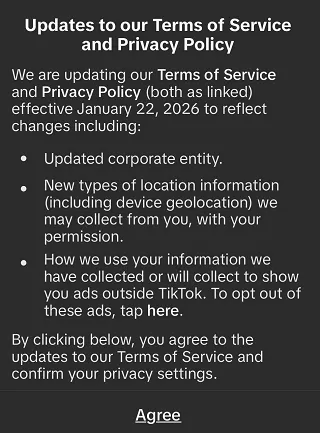
TikTok introduced a new privacy policy that requires U.S. users to agree to updated terms. The revised policy allows for more granular data collection — including precise location information when enabled and tracking of interactions with AI features — as well as expanded use of data for third-party advertising. [1] - Perceptions of censorship:
Some users have reported what they perceive as restricted searches or content suppression since the transition. While concrete evidence of deliberate censorship has not been confirmed, user speculation and anecdotal accounts have intensified scrutiny of the app’s governance under American control. [1]
Why TikTok’s U.S. Change Matters
The shift to U.S. ownership reflects years of political and regulatory pressure over concerns about data privacy, national security, and foreign influence on a highly influential social media platform. Under a 2024 U.S. law targeting foreign-controlled applications, TikTok was required to divest majority control of its American operations to continue serving U.S. users — a deadline that was extended multiple times before the sale was finalized in early 2026. [3]
Although the underlying recommendation technology remains, the new ownership structure gives the U.S. based executives and stakeholders more influence over data practices, algorithmic development, and content moderation policies. These changes have significant implications for how users, creators, and marketers experience the platform, particularly at a time when competition from emerging short-form video apps is growing. [4]
Practical Implications for Users, Creators, and Brands
- Users may see changes over time in content recommendations as the algorithm adapts to U.S. ownership parameters and retraining processes. (5)
- Creators could be affected by shifts in algorithm performance metrics and visibility patterns, depending on how content is surfaced or weighed under new governance. [4]
- Brands and advertisers may benefit from clearer compliance with U.S. data privacy standards, yet also face uncertainty as the platform evolves its policies and user engagement dynamics. [6]
Overall, the transition places TikTok under intense public and regulatory scrutiny, even as its fundamental operational mechanisms , particularly the recommendation algorithm remain intact for now.
- TikTok US Deal Raises Questions for Some Senators [1]
TikTok’s newly finalized U.S. ownership arrangement, created to comply with federal law and avert a nationwide ban, has drawn scrutiny from some U.S. senators who say details provided so far are insufficient to determine whether the deal meets statutory requirements. The proposed transaction will see TikTok’s U.S. operations divested from its previous China-based parent company, ByteDance, and transitioned to the TikTok USDS Joint Venture LLC with majority American ownership. [1][2][3]
According to reporting from Social Media Today, lawmakers on the U.S. The House Oversight Committee have raised concerns that the current documentation does not clearly show whether the arrangement fully satisfies the conditions of the Protecting Americans from Foreign Adversary Controlled Applications Act passed by Congress in 2024, prompting a forthcoming review by the committee. [1][4]
What changed
- U.S. ownership deal completed for TikTok’s American operations:
TikTok finalized a divestiture of its U.S. business, forming a new majority-U.S.-owned entity in compliance with federal legislation intended to address national security concerns. The transaction included investment from American firms such as Oracle, Silver Lake, and MGX, while ByteDance retains a minority stake of under 20%. [3][6] - Senators question compliance with statutory requirements:
Some members of Congress, including those on oversight panels, say the documentation provided by TikTok and its partners does not yet clarify whether all legal conditions , particularly those related to algorithm control and data security — have been met. There is uncertainty about whether the arrangement fully severs control by foreign adversaries, as required by the law. [1][2][4] - House Oversight Committee review announced:
Social Media Today reports that the House Oversight Committee plans to review the details of the deal, underscoring the ongoing legislative interest in ensuring that TikTok’s operation in the United States adheres to national security and data governance expectations set by Congress. [1]
Why this matters
The scrutiny comes against the backdrop of bipartisan concerns in U.S. federal policy about TikTok’s ownership, data handling practices, and technological influence. The Protecting Americans from Foreign Adversary Controlled Applications Act, the law that precipitated the divestiture, mandates that covered platforms must divest from a foreign adversary-controlled parent company in order to continue operating in the U.S. or face removal from app stores and web-hosting services. [4]
Lawmakers have emphasized that even after the sale and restructuring, questions remain about algorithm control, data access, and the extent to which the platform can operate independently of its former Chinese ownership, potentially influencing user experiences and national security. [1][4]
Practical implications for U.S. users, creators, and policymakers
- Ongoing regulatory uncertainty:
The oversight review signals that TikTok’s legal status in the U.S. could continue to evolve, potentially affecting how the app operates for millions of users and creators if additional conditions or clarifications are required by lawmakers. [1][2] - Content recommendation algorithm remains a focal point:
One of the central legal questions is whether the new ownership and governance structure sufficiently isolates TikTok’s algorithm — a proprietary recommendation system that critics have flagged as a point of national security and influence concern — from foreign influence. [4][1] - Legislative and judicial context continues to shape outcomes:
The deal comes after years of legislative attempts to regulate or restrict TikTok in the U.S., including the passage of federal law and court rulings upholding its constitutionality. Ongoing oversight indicates that Congress will remain engaged in how the platform’s new U.S. arrangement is implemented and monitored. [4][1][5]
TikTok’s U.S. ownership transition has moved forward under a new majority-U.S. corporate structure designed to meet federal security requirements, yet some U.S. senators have expressed concern that key details of the deal may not fully satisfy statutory conditions. The House Oversight Committee’s upcoming review highlights continued legislative interest and uncertainty about whether the transaction addresses all legal and technical requirements, especially regarding algorithm independence and data security. The outcome of this review could influence how TikTok’s U.S. operations are governed, regulated, and perceived. [1][4]
- TikTok Says Its Working To Address Issues With US App [1]
TikTok stated that it is actively working to resolve technical issues that affected users across the United States, after reports of widespread service disruptions impacting posting, engagement metrics, and creator earnings displays.
The issue was first acknowledged publicly through a statement from TikTok’s U.S. Data Security (USDS) Joint Venture, and Social Media Today reports that TikTok confirmed the problems were related to infrastructure issues affecting its U.S.-based systems. [1][5]
According to TikTok, progress toward recovery was made, though some users continued to experience degraded performance during the restoration process. The company framed the incident as a technical outage rather than a policy or moderation-related issue. [1]
What changed
- Service disruptions affected core app functionality in the U.S.:
Users reported difficulty posting videos, delays or errors when loading content, and temporary inconsistencies in engagement metrics such as views, likes, and comments. [1][2] - Creator analytics and earnings data displayed inaccurately:
Some creators saw zeroed or missing monetization figures during the outage, which TikTok attributed to reporting delays caused by the system disruption rather than actual revenue loss. [1] - TikTok confirmed the issue stemmed from infrastructure failures:
Social Media Today reported that TikTok linked the incident to problems at a U.S.-based data center supporting the app’s operations, and emphasized that engineers were working to restore stability. [1]
Why TikTok is addressing this publicly
TikTok stated that maintaining reliability for U.S. users is a priority, particularly given the scale of creator and business activity on the platform. The company has increasingly emphasized transparency around technical incidents as part of its broader efforts to reinforce trust in its U.S. operations.
The same reporting notes that TikTok’s U.S. infrastructure is operated through partnerships designed to localize data handling and system management, making service stability a key operational and reputational concern. [1][3]
Practical implications for users, creators, and brands
- Short-term engagement metrics may be unreliable:
During outages, views, likes, and earnings data may not accurately reflect actual performance, requiring users to wait for post-recovery corrections. [1] - Creator monetization workflows can be temporarily disrupted:
Brands and creators relying on real-time performance data may experience delays in reporting and payouts when backend systems are affected. [1][2] - Platform reliability remains a competitive signal:
Social Media Today notes that high-visibility outages can influence perceptions of platform stability, particularly among advertisers and professional creators. [1]
Overall, TikTok confirmed that it experienced U.S.-specific technical issues tied to infrastructure disruptions and stated that it was actively working to restore full functionality.
The incident highlights the platform’s reliance on complex data center operations and underscores the importance of system resilience as TikTok continues to position itself as a central hub for creator activity and brand engagement in the U.S. market. [1][3][4]
.
- US TikTok Users Seek Alternatives After Change in Ownership [1]
A segment of TikTok’s U.S. user base began exploring alternative apps following TikTok’s transition to a new U.S.-majority ownership structure. Social Media Today reported that the shift coincided with user concerns about the platform’s new U.S. governance and a period of service instability attributed by TikTok to a power outage at a U.S. data center. [1]
The same report noted a measurable spike in interest toward several alternative apps, as some users reassessed their reliance on TikTok during the early phase of the U.S. ownership transition. [1]
What changed
- TikTok’s U.S. operations transitioned under a new ownership structure:
TikTok finalized a U.S. restructuring intended to comply with U.S. law and continue operations domestically under a new entity and governance model. [4][5] - A wave of U.S. users downloaded alternatives during the transition period:
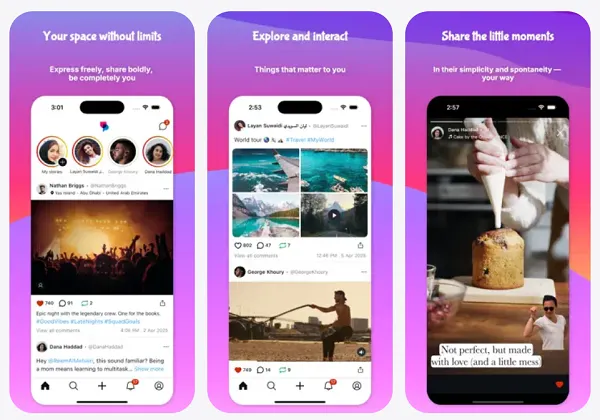
Social Media Today reported increased attention to apps including Upscrolled, Skylight, and Yope, describing these as destinations users tried while TikTok’s U.S. version was undergoing change. [1] - Alternative platforms reported unusual traffic surges:
Social Media Today cited that Upscrolled experienced demand high enough to cause server issues, while Skylight saw a sharp increase in new sign-ups during the same period. [1][6][2] - TikTok acknowledged U.S. service instability tied to data center disruption:
Social Media Today reported that TikTok attributed the stability issues to a power outage at a U.S. data center, and separately, TechCrunch also reported on fluctuations in usage after the ownership transition. [1][3]
Why users sought alternatives
Social Media Today linked user switching behavior to two immediate drivers:
- Operational reliability concerns: service instability during the transition period created uncertainty for some users and creators. [1]
- Trust and governance concerns following the U.S. ownership shift: the report noted user discussion and criticism around how content may be handled under new management, including claims of search or reach inconsistencies for certain topics (claims TikTok attributed to the outage-related instability). [1][7][8]
Separately, other reporting described broader user anxiety around privacy and perceived moderation changes following updated terms and a new U.S. entity structure, contributing to some users diversifying across platforms. [9]
Practical implications for users, creators, and brands
- Audience fragmentation risk increases during transition periods:
Sudden interest spikes in alternative apps can pull attention away from TikTok temporarily, affecting reach patterns and creator consistency. [1][3] - Creators may accelerate multi-platform distribution:
When reliability or policy trust is questioned, creators often reduce dependency on a single platform by expanding to multiple channels. This behavior was referenced in coverage of U.S. users reassessing TikTok after the ownership change. [9] - Short-term analytics and posting performance may fluctuate:
When service disruptions occur, engagement and distribution systems can behave inconsistently for a period, influencing user perception and publisher planning. [1]
Overall, reporting indicates that TikTok’s U.S. ownership transition coincided with a short-term rise in users experimenting with alternatives, driven by a combination of service instability and trust questions about the platform’s U.S. restructuring. While it is not yet clear whether these shifts persist long-term, the episode demonstrates how quickly user behavior can change when a major social platform undergoes governance and infrastructure transitions. [1][3][9]